Sen Trắng Hoa Kỳ

Từ Tổng vụ Thanh niên thời Ôn Thiện Minh
đến Nhiếp sự vụ Thanh niên thời Ôn Minh Tâm
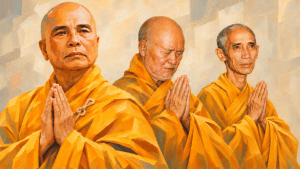
Lời huấn thị của Thầy Minh Tâm gửi các đệ tử nhân ngày sinh nhật thứ 90:
Nam Mô A Di Đà Phật
TỔ ĐÌNH PHẬT ÂN
Các con thân mến!
Hôm nay, Thầy vừa tròn chín mươi tuổi. Trong kiếp người, sinh, lão, bệnh, tử là điều chắc chắn nhất. Trước khi xa lìa cõi thế để về hầu Phật và ông bà tổ tiên, Thầy có vài điều muốn nhắc nhở các con.
Thầy trò gặp nhau là nhờ duyên từ những đời trước. Thương yêu, hòa hợp và hỷ xả giúp chúng ta kết thiện duyên qua nhiều đời. Chia rẽ, ghét bỏ và nuôi giữ oán giận gieo mầm khổ đau, dẫn đến tan vỡ. Đó là lẽ tự nhiên của nhân duyên. Các con cũng biết Thầy vẫn tôn kính cách lòng từ bi của đức Quán Thế Âm được biểu hiện qua hình ảnh ngài Tiêu Diện Đại Sĩ. Nay Thầy chỉ nhắc thêm đôi điều, chắc cũng không thừa. Điều gì là thiện duyên, thiện tâm, thiện ý thì các con hãy chăm lo vun bồi. Điều gì là nghịch duyên, tà tâm, tà ý thì hãy cố gắng dứt trừ.
Đến ngày Thầy chia xa, các con hãy y theo di nguyện của Thầy. Đã phát chí xuất gia thì hãy bền lòng hành trì, trên cầu giác ngộ, dưới hóa độ chúng sinh. Hãy một lòng trung thành với Tam Bảo, giữ gìn giới Bồ-tát, chớ để mình lãng xao. Danh lợi như mây nổi. Điều gì làm hao mòn chí nguyện của bậc trượng phu thì hãy dứt khoát buông bỏ. Ân nghĩa tổ tiên, cha mẹ và Thầy Tổ phải ghi nhớ nằm lòng. Phụng sự chúng sinh, yêu thương Tổ quốc, các con hãy giữ một dạ chí thành.
Hãy tâm tâm niệm niệm nhớ đáp đền tứ trọng ân. Dù đứng ở phương vị nào, các con cũng phải hết lòng hộ trì Giáo hội Phật giáo Việt Nam Thống nhất để phụng sự dân tộc và nhân loại. Người tu muốn sống tự tại và hướng đến giải thoát thì phải thực hành lời “Diệt Ngã Phá Chấp”, dẹp sự chấp ngã và tháo gỡ những điều mình còn bám víu. Chùa to, tượng Phật lớn có thể cần đến. Điều thiết yếu của đời tu là nghiêm trì giới luật. Ham hưởng thụ và sống xa hoa là bất nhân. Cầu an cho riêng mình, ngại hy sinh và chỉ nghĩ đến mình là hèn nhác.
Học thức, nhận thức và kiến thức đều đáng quý. Thầy coi trọng hơn cả ý thức về mình là ai và có bổn phận gì. Các con hãy nhớ mình là con dân của đất Việt kiêu hùng. Là người xuất gia, hãy ý thức mình là trưởng tử của đức Phật và ghi lòng lời này:
“Tác Như Lai sự – Hành Như Lai Sự”
Thầy đặc biệt nhắc các con rằng quan tâm, hướng dẫn đệ tử xuất gia và tại gia, Gia Đình Phật Tử, Hướng đạo Phật giáo, cùng thanh niên, học sinh, sinh viên Phật tử là trách nhiệm cốt lõi. Hãy ghi lòng lời vàng ngọc của Sư ông Thượng nhân Trí Quang:
“Người tu sĩ Phật giáo phải đi sát với quần chúng Phật tử, để thấy nỗi cơ cực của họ mà phát khởi Đại bi tâm, Bồ tát tâm, hành trì Bồ tát hạnh”.
Những lời tâm huyết Thầy gửi lại hôm nay cũng là để tiếp truyền sự nghiệp của Tông môn, cùng hướng về mục đích tối thượng được ghi trong hai vế:
“Thập Phương Bạt Già Phạm – Nhất Lộ Niết Bàn Môn”
Thầy mong các con ghi nhớ những lời này, để đến lúc chia xa, Thầy trò cùng hoan hỷ.
Nam Mô Trí Quang Đường Thượng Sư Tổ Tác Đại Chứng Minh.
Phật Ân Tự, ngày 15 tháng 10, Bính Ngọ
(23/11/2026)
Lệ Dũng – Thích Minh Tâm
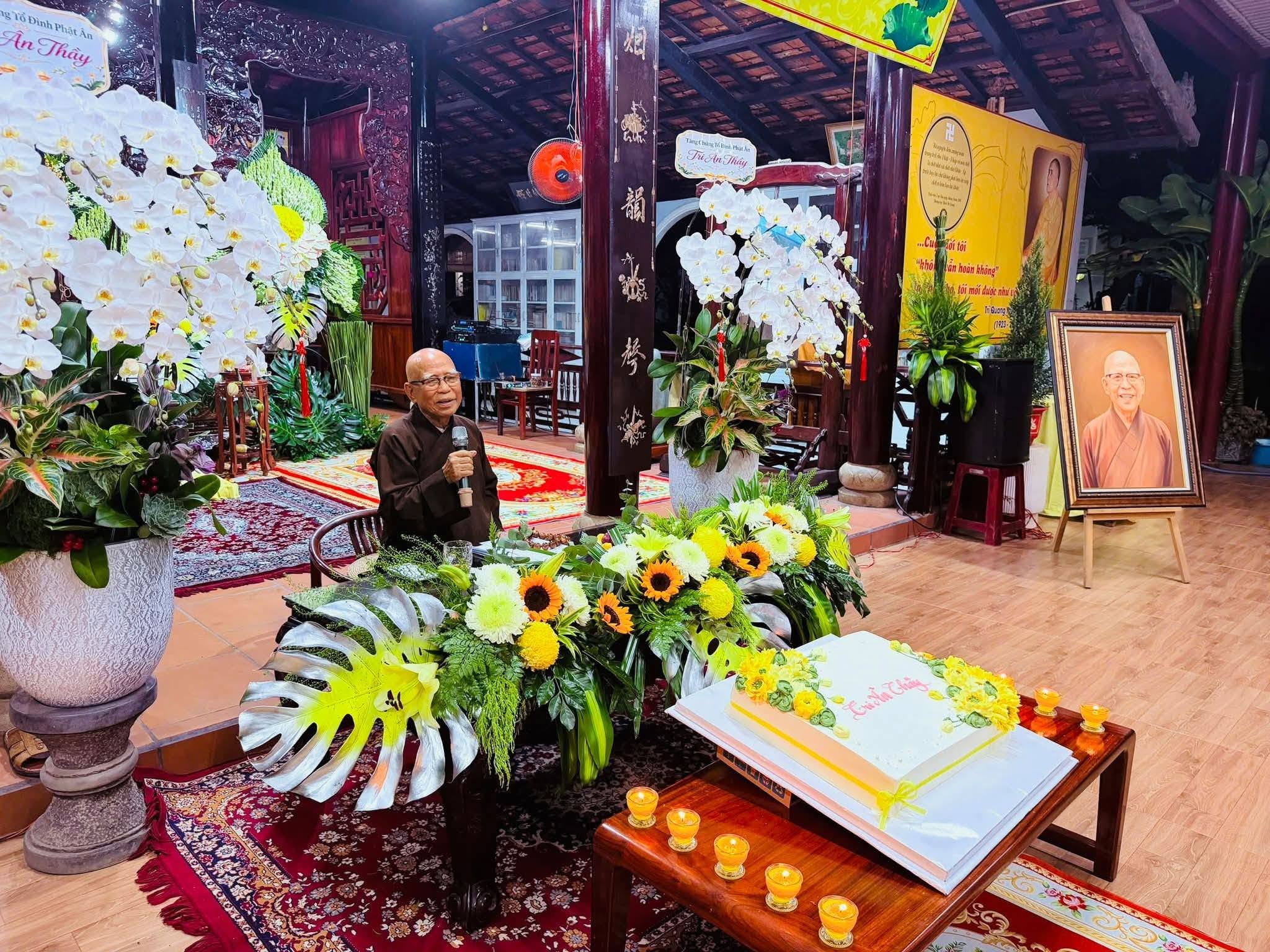
Ngày tròn chín mươi tuổi, Ôn Minh Tâm mở lời bằng bốn tiếng “Các con thân mến!” rồi nhắc đến sinh, lão, bệnh, tử. Nói về buổi mình sẽ vắng mặt, Ôn căn dặn người sau hãy hết lòng hộ trì Giáo hội để phụng sự dân tộc và nhân loại. Ôn đặc biệt lưu tâm đến việc dìu dắt Gia Đình Phật Tử và các giới thanh niên, học sinh, sinh viên Phật tử. Một bậc trưởng lão đã đi gần trọn đường đời vẫn nghĩ đến những người mới chập chững bước vào đường đạo. Lời ấy để lại trong lòng hàng Huynh trưởng chúng ta một câu hỏi: Khi thế hệ này lui xuống, điều gì trong đạo nghiệp của Thầy Tổ sẽ còn đủ sức sống để thế hệ sau tự nguyện gánh lấy?
Khi dựng nền, khi củng cố
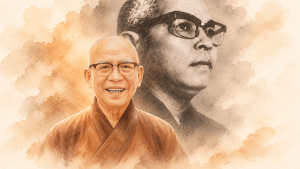
Năm 1964, trong buổi đầu thành lập Giáo hội Phật giáo Việt Nam Thống nhất, Ôn Thích Thiện Minh được suy cử làm Tổng vụ trưởng Tổng vụ Thanh niên thuộc Viện Hóa Đạo. Giữa bao việc phải định lập, Giáo hội dành cho công cuộc thanh niên một vị trí trong cơ cấu hoằng hóa. Tại Trung tâm Quảng Đức, qua diễn giảng, gặp gỡ và sinh hoạt văn hóa, người trẻ có thể đến với đạo từ chính những câu hỏi của thời mình. Tầm nhìn của Ôn Thiện Minh nằm ở chỗ sớm nhận ra rằng người trẻ có thể học gánh vác việc Giáo hội ngày mai bằng cách dự phần vào việc Giáo hội ngay hôm nay.
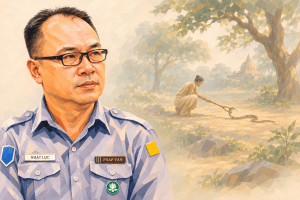
Gần sáu thập niên sau, danh xưng Nhiếp sự vụ Thanh niên căn cứ từ Quy chế Lược yếu Hội đồng Giáo phẩm Trung ương và Văn phòng Viện Tăng Thống. Tại Tăng nghị ngày 28 tháng 12 năm 2022 ở Tổ đình Phật Ân, Hội đồng Giáo phẩm Trung ương y cứ tinh thần và nguyên tắc của Hiến chương để nghị lập quy chế này. Được chuẩn y ngày 29 tháng 12, Quy chế giao Văn phòng Viện Tăng Thống điều hành các hoạt động của Giáo hội trong khi chờ đủ duyên triệu tập Đại hội bất thường và kiện toàn hai Viện. Nhiếp sự vụ Thanh niên được đặt trong Văn phòng ấy. Cùng ngày, Hòa thượng Thích Tuệ Sỹ, thừa ủy nhiệm Hội đồng Giáo phẩm Trung ương, ấn ký quyết định thỉnh cử Hòa thượng Thích Minh Tâm làm Nhiếp sự trưởng Thanh niên.
Từ Tổng vụ thuộc Viện Hóa Đạo ở buổi dựng nền đến Nhiếp sự vụ thuộc Văn phòng Viện Tăng Thống ở thời củng cố, mỗi danh xưng ghi dấu một cách phân nhiệm của Giáo hội. Quy chế Lược yếu giao Nhiếp sự trưởng hướng dẫn đường lối tu học, sinh hoạt của Gia Đình Phật Tử Việt Nam theo tôn chỉ đã được phê chuẩn, đồng thời đệ trình Chánh Thư ký Viện Tăng Thống những việc về văn kiện, nhân sự và tấn phong Huynh trưởng cấp Dũng theo trình tự quy định. Ý nghĩa của việc phân nhiệm ấy hiện rõ trong hoàn cảnh ra đời của nó. Giữa lúc cơ cấu trung ương còn chờ kiện toàn, Giáo hội vẫn xác lập nơi chịu trách nhiệm về công cuộc thanh niên. Một kỳ đại hội có thể chờ thuận duyên. Một thế hệ chỉ có một lần tuổi trẻ.
Những vấn đề sinh tử của tiền đồ chung
Sinh mệnh của đạo pháp nằm ở sức chuyển hóa con người. Tiếng kinh còn vang dưới mái chùa là một duyên lành. Đến khi một người trẻ đứng trước cái chết của người thân, sự đổ vỡ trong gia đình hay nỗi cô độc của chính mình, mới biết lời kinh ấy đã đi vào đời họ đến đâu. Lẽ vô thường có thể giúp họ quý người đang còn bên mình. Cái thấy duyên khởi có thể giúp họ hiểu nguyên do của một lầm lỗi, để sửa chữa mà bớt gây thêm khổ đau. Và khi một người trẻ chất vấn điều chúng ta từng tin chắc, lời dạy vô ngã cũng trở về soi sáng chính người hướng dẫn. Có khi điều đọng lại sau một thời pháp về hỷ xả là ký ức về cách một Huynh trưởng đối đãi với người từng làm mình tổn thương. Nỗi lo sâu xa của sự trao truyền nằm ở đó. Nghi lễ có thể vẫn được cử hành đầy đủ trong khi khả năng tự soi, tự sửa cứ hao mòn qua từng thế hệ.
Tiền đồ dân tộc nơi hải ngoại tùy thuộc vào việc ký ức Việt Nam có còn sinh ra tình nghĩa và trách nhiệm hay không. Có một ngày, người cháu muốn hỏi bà vì sao cả nhà mình rời quê hương, vì sao sang đến vùng đất mới bà vẫn đi tìm một mái chùa. Nếu hai bà cháu thiếu tiếng nói chung để đi hết câu chuyện, một phần lịch sử sẽ khuất theo người cuối cùng còn nhớ. Giữ tiếng Việt trong mái nhà Lam là giữ cho cuộc đối thoại ấy còn có thể diễn ra. Trong cuộc đối thoại đó, có cả những trang khó đọc, những chia lìa, những bất đồng và những nỗi đau mà mỗi gia đình nhớ một cách khác nhau. Khi người trẻ có thể hỏi và người đi trước có thể kể bằng sự thành thật, ký ức ấy có cơ hội trở thành lòng cảm thông. Một thế hệ hiểu được vì sao đồng bào mình từng khổ sẽ có thêm lý do để đứng bên những người đang khổ. Khi lòng nhớ nguồn mở ra được một bổn phận với người khác, gia tài dân tộc tìm được đời sống mới trên quê hương mà con cháu chúng ta đang góp phần xây dựng.
Tiền đồ Giáo hội tùy thuộc vào việc giềng mối chung có còn quy tụ được những người có phẩm hạnh và dũng khí hay không. Văn kiện xác lập thẩm quyền. Người sử dụng thẩm quyền gây dựng uy tín bằng sự công minh, bằng khả năng giải thích quyết định của mình và bằng lòng can đảm nhận sai. Hòa hợp được thử ngay khi một ý kiến trái ngược chạm đến điều mỗi người tha thiết bảo vệ. Một Huynh trưởng trẻ nói lời ngay thẳng rồi gặp sự lạnh nhạt có thể ngần ngại lên tiếng lần sau, đúng vào lúc việc chung cần nghe tiếng nói ấy. Cũng có khi người đi trước, vì lo cho việc chung, giữ phần quyết định quá lâu, đến ngày bàn giao mới nhận ra người kế nhiệm còn ít dịp tập phán đoán. Người thừa kế một chức vụ có thể được chỉ định trong một ngày. Người đủ sức giữ gìn giềng mối được đào luyện qua nhiều năm. Những năm ấy bắt đầu trong các Phật sự bình thường, khi chúng ta còn có thể cùng nhau bàn việc, nghe lời khác ý và học cách chịu trách nhiệm về điều mình quyết định.
Đến lượt chúng ta truyền đăng
Ôn Minh Tâm nhắc lời Sư ông Trí Quang, dạy người tu phải đến gần Phật tử, thấy nỗi cơ cực của họ mà phát khởi tâm đại bi. Từ lời ấy, chúng ta hiểu thêm chữ nhiếp. Có người trẻ lặng lẽ rời sinh hoạt và một lời hỏi thăm chân thành có thể giúp chúng ta hiểu điều bao lâu nay họ chưa nói. Có Huynh trưởng mới nhận việc rồi vấp váp, và chính cơ hội được cùng người đi trước sửa lại việc ấy có thể giúp họ gắn bó lâu dài với Phật sự. Tình thương trong công cuộc trao truyền có khi đòi chúng ta bước tới để đỡ một người, có khi đòi chúng ta lui lại để người ấy tự đứng vững.
Bấy giờ sứ mệnh chung từ Ôn Thiện Minh đến Ôn Minh Tâm là xây dựng một thế hệ có trí tuệ để tự mình sống đạo, có tình nghĩa để phụng sự dân tộc và có bản lĩnh để cùng gánh vác Giáo hội. Với hàng Huynh trưởng chúng ta, sứ mệnh ấy có thể bắt đầu ngay trong Phật sự kế tiếp, khi một người trẻ được mời dự bàn từ đầu, được tin cậy giao một phần việc và có người cùng nhìn lại kết quả. Nếu họ tìm ra cách làm hay hơn, việc chung được hưởng cái hay ấy, còn chúng ta có thêm một dịp học từ người mình đang dìu dắt. Có lẽ đó cũng là một niềm vui của người đi trước khi nghĩ đến tiền đồ Giáo hội.
Từ Hoa Kỳ hướng về Tổ Đình Phật Ân trong ngày khánh tuế, xin hãy ghi lòng hai tiếng “các con”. Một thuở, Thầy Tổ đã gọi chúng ta như thế, rồi đặt vào tay mình một phần việc đạo, khi đôi tay ấy vẫn còn vụng về. Mong sao đến lượt mình, chúng ta cũng biết trao lại sự tin cậy ấy khi còn đủ thì giờ ở bên người đón nhận. Khi đó, tình thương của Ôn đã đi qua thêm một đời người. Và trong một đời người ấy, đạo pháp, dân tộc và Giáo hội lại có thêm một người tự nguyện gánh vác.
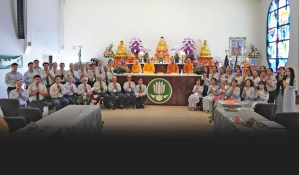
Kính bạch Hòa thượng Thích Minh Tâm, nhân lễ khánh tuế cửu tuần, Ban Hướng Dẫn Gia Đình Phật Tử Việt Nam Tại Hoa Kỳ, thay mặt hàng Huynh trưởng áo lam, thành kính đảnh lễ và kính chúc Ôn pháp thể khinh an, đạo thọ miên trường, tuệ đăng thường chiếu. Nguyện Ôn an hòa qua mỗi sớm chiều, để những người ở xa còn duyên về thăm, còn được ngồi bên Ôn và thưa một lời biết ơn mà bao năm qua gánh vác việc Giáo Hội mới thấu hết.
Cùng với lời kính chúc, hàng hậu học chúng con xin dâng một lời nguyện báo ân. Nguyện nhớ lời Ôn dạy về hòa hợp khi tình huynh đệ đi qua thử thách, nhớ lòng kiên nhẫn của Ôn khi người kế thừa còn vấp váp và nhớ bổn phận hộ trì Giáo hội ngay cả trong những Phật sự âm thầm. Kính mong Ôn an lòng khi thấy hàng Huynh trưởng áo lam dần làm trọn những việc Ôn đã gửi gắm, như một lời thưa được đáp bằng năm tháng hành trì.
Nam Mô Chứng minh Sư Bồ Tát Ma Ha Tát
Thành kính đảnh lễ.
Phật lịch 2570 – Livermore, CA 21.11.2026
QUANG NGỘ Đào Duy Hữu
Vụ trưởng GĐPT Vụ – GHPGVNTNHK;
trưởng Ban Hướng Dẫn GĐPT Việt Nam Tại Hoa Kỳ
 In the Years of Founding and Consolidation
Master Thích Minh Tâm’s Instructions to His Disciples on His Ninetieth Birthday:
Namo Amitābha Buddha
PHẬT ÂN PATRIARCHAL MONASTERY
My dear children,
Today I turn ninety. In human life, nothing is more certain than birth, aging, illness, and death. Before I leave this world to attend upon the Buddha and our ancestors, there are a few things I wish to remind you of.
Our meeting as teacher and disciples is due to affinities from past lives. Love, harmony, and the willingness to let go help us form wholesome bonds across many lifetimes. Division, aversion, and nursing grudges sow the seeds of suffering and estrangement. Such is the way causes and conditions unfold. As you know, I have long revered the way the compassion of Avalokiteśvara is manifested in the figure of the Great Being Tiêu Diện. I wish to add a few words, which may still bear saying. Cultivate wholesome affinities, wholesome states of mind, and wholesome intentions. Make every effort to overcome adverse conditions and uproot unwholesome states of mind and intentions.
When the day comes for me to part from you, please carry out my final wishes. Having resolved to enter monastic life, persevere in your practice, seeking awakening and guiding sentient beings toward liberation. Remain wholeheartedly faithful to the Three Jewels and diligent in observing the Bodhisattva precepts. Fame and gain are like passing clouds. Let go resolutely of whatever weakens your noble resolve. Keep ever in your hearts the debt of gratitude you owe to your ancestors, parents, teachers, and lineage patriarchs. Serve sentient beings and love your homeland with wholehearted sincerity.
Keep the Four Great Debts of Gratitude constantly in mind and strive to repay them. Whatever your position, do your utmost to uphold the Unified Buddhist Sangha of Vietnam in service to the Vietnamese people and to humanity. A monastic who seeks inner freedom and liberation must put into practice the injunction “Uproot ego-clinging and break through attachment” by loosening the hold of self-clinging and letting go of what one still grasps. Large temples and imposing Buddha images may have their place. Strict observance of the Vinaya is essential to monastic life. Indulging in pleasure and living in luxury is inhumane. Seeking comfort for oneself, shrinking from sacrifice, and thinking only of oneself amount to cowardice.
Learning, understanding, and knowledge are all valuable. What I value most is an awareness of who you are and what responsibilities you bear. Remember that you are children of Vietnam, a proud and indomitable land. As monastics, know yourselves to be the Buddha’s foremost heirs, and take these words to heart:
“Do the Tathāgata’s work. Carry out the Tathāgata’s tasks.”
I especially urge you to remember that a core responsibility is to care for and guide ordained and lay disciples, the Vietnamese Buddhist Youth Association (Gia Đình Phật Tử), Buddhist Scouts, and young Buddhists, including school pupils and university students. Take to heart these precious words of our revered elder, Venerable Thích Trí Quang:
“Buddhist monastics must stay close to lay Buddhists, so that, seeing the hardships they endure, they may awaken great compassion and the bodhisattva mind, and practice the bodhisattva way.”
I leave you these words from my heart so that the work of our lineage may continue and we may all turn toward the highest aim expressed in these two lines:
“The Blessed Ones of the ten directions,
a single path to the gate of Nirvāṇa.”
I hope you will take these words to heart, so that when the time comes to part, teacher and disciples may do so with joy.
Homage to our revered lineage patriarch, Venerable Thích Trí Quang, who bears solemn witness.
Phật Ân Temple, the fifteenth day of the tenth lunar month, Year of the Fire Horse
(November 23, 2026)
Lệ Dũng – Thích Minh Tâm
*
The Lamp of Our Teachers and Patriarchs
and the Enduring Light of the Unified Buddhist Sangha of Vietnam
From the General Department of Youth in the time of Venerable Thích Thiện Minh
to the Office of Youth Affairs in the time of Venerable Thích Minh Tâm
On his ninetieth birthday, Venerable Thích Minh Tâm began with the words “My dear children!” He then spoke of birth, aging, illness, and death. Looking ahead to the time when he would no longer be with us, he urged those who would follow to uphold the Sangha wholeheartedly in service to the Vietnamese people and to humanity. He gave particular attention to the responsibility of guiding the Vietnamese Buddhist Youth Association, as well as young Buddhists in schools, colleges, and universities. An eminent elder nearing the fullness of a long life was thinking of those just taking their first steps on the Buddhist path. His words leave those of us who serve as youth leaders with a question. When our generation steps aside, what in the legacy of our teachers and patriarchs will still have enough life in it for the next generation to take up willingly?
In the Years of Founding and Consolidation
In 1964, at the founding of the Unified Buddhist Sangha of Vietnam (Giáo hội Phật giáo Việt Nam Thống nhất), Venerable Thích Thiện Minh was elected Director General of the General Department of Youth (Tổng vụ Thanh niên) under the Institute for the Propagation of the Dharma (Viện Hóa Đạo). Amid the many tasks of establishing the new Sangha, youth work was given a place in its structure for propagating the Dharma. At the Quảng Đức Center, lectures, gatherings, and cultural activities allowed young people to approach Buddhism through the questions of their own time. Venerable Thích Thiện Minh saw early on that young people could learn to shoulder the responsibilities of the Sangha tomorrow by taking part in its work today.
Nearly six decades later, the designation Office of Youth Affairs (Nhiếp sự vụ Thanh niên) was established under the Provisional Regulations of the Central Council of Elders and the Office of the Institute of the Supreme Patriarch. At the ecclesiastical assembly convened on December 28, 2022, at Phật Ân Patriarchal Monastery, the Central Council of Elders drew on the spirit and principles of the Sangha’s Charter in formulating these regulations. Approved on December 29, they entrusted the Office of the Institute of the Supreme Patriarch (Văn phòng Viện Tăng Thống) with administering the Sangha’s affairs pending the convening of an extraordinary assembly and the reconstitution of its two institutes. The Office of Youth Affairs was established within that Office. On the same day, acting under the authority of the Central Council of Elders, Venerable Thích Tuệ Sỹ signed the decision appointing Venerable Thích Minh Tâm Head of the Office of Youth Affairs (Nhiếp sự trưởng Thanh niên).
The General Department of Youth under the Institute for the Propagation of the Dharma in the founding years and the Office of Youth Affairs under the Office of the Institute of the Supreme Patriarch during consolidation reflect the Sangha’s distinct arrangements for each period. Under the Provisional Regulations, the Head of the Office of Youth Affairs guides the study, practice, and activities of the Vietnamese Buddhist Youth Association (Gia Đình Phật Tử Việt Nam, GĐPTVN) in accordance with its approved aims and principles. The Head also submits matters concerning governing documents, appointments, and the conferral of the Dũng rank on youth leaders to the Chief Secretary of the Institute of the Supreme Patriarch, following the prescribed procedures. The circumstances make the significance of that arrangement clear. Even as its central structure awaited reconstitution, the Sangha ensured that youth work had a designated office responsible for it. An assembly can wait until conditions are favorable. A generation is young only once.
What Is at Stake in Our Common Future
The life of the Dharma lies in its power to transform human beings. It is a blessing that the sutras still resound within the temple. When a young person faces the death of someone dear, the breaking apart of a family, or loneliness of their own, they come to know how deeply those teachings have entered their life. Impermanence can teach them to cherish those who are still beside them. Dependent origination can help them see the conditions that led to a mistake, so that they can set it right without adding to the suffering it caused. And when a young person questions something we have long held to be certain, the teaching of non-self casts its light on us as guides as well. What stays with someone after a Dharma talk on letting go may be the memory of how a youth leader treated a person who had once hurt them. Here lies one of the deepest concerns of transmission. The rites may still be observed in full even as the capacity to examine and correct ourselves wears away from one generation to the next.
The future of the Vietnamese people overseas depends on whether the memory of Vietnam can still give rise to kinship and responsibility. One day, a grandchild may want to ask her grandmother why the family left Vietnam and why, upon arriving in a new land, she still went looking for a Buddhist temple. If the two lack a common language in which to tell the whole story, part of that history will disappear with the last person who remembers it. Keeping Vietnamese alive in the community of the blue uniform keeps that conversation possible. It can hold difficult chapters, separations, disagreements, and sorrows remembered differently by different families. When the young can ask and their elders can tell the story honestly, memory can deepen into compassion. A generation that understands why its own people once suffered has more reason to stand beside those who suffer today. When gratitude for our roots awakens a sense of duty toward others, our national heritage finds new life in the country our children and grandchildren are helping to build.
The future of the Sangha depends on whether its institutions can still bring together people of integrity and moral courage. Governing documents establish authority. Those entrusted with it earn respect through fairness, a willingness to explain their decisions, and the courage to acknowledge mistakes. Harmony is tested when a contrary view touches something we hold dear. A young leader who speaks candidly and meets with coldness may hesitate to speak again, at precisely the moment when the community needs to hear that voice. Sometimes those who came before us, out of concern for the work, hold on to decisions for too long. Only at the handover do they realize how few opportunities their successors have had to exercise judgment. An officeholder can be appointed in a day. It takes years to form someone capable of safeguarding the institutions of the Sangha. Those years begin in ordinary acts of Buddhist service, as we learn to deliberate together, hear views that differ from our own, and take responsibility for what we decide.
Our Turn to Pass on the Lamp
Venerable Thích Minh Tâm recalled the teaching of the late Venerable Thích Trí Quang, who urged monastics to draw close to lay Buddhists, see the hardships they endure, and allow great compassion to arise. His words deepen our understanding of nhiếp, the work of drawing people near and caring for them. A young person may quietly drift away from the group, and a sincere inquiry may help us hear what has long gone unsaid. A new youth leader may stumble in a first assignment, and the chance to put things right alongside an experienced leader may be what keeps that person committed to Buddhist service for years to come. Love in the work of transmission sometimes asks us to step forward to steady someone, and sometimes to step back so they can stand on their own.
The mission that runs from Venerable Thích Thiện Minh to Venerable Thích Minh Tâm is to nurture a generation with the wisdom to live the Dharma for themselves, the sense of kinship to serve the Vietnamese people, and the courage to share responsibility for the Sangha. For those of us who serve as youth leaders, that mission can begin with our very next undertaking, when a young person is invited into the discussion from the start, entrusted with a share of the work, and given a chance to reflect on the outcome alongside us. If they find a better way, the work benefits, and we have another opportunity to learn from those we guide. Perhaps that, too, is one of the quiet joys of looking ahead to the future of the Sangha.
From the United States, we turn our thoughts toward Phật Ân Patriarchal Monastery on this birthday celebration and take to heart the words “my dear children.” Our teachers and patriarchs once called us by those words and placed a share of the Dharma’s work in our still-unpracticed hands. May we, in our turn, pass on that trust while we still have time to stand beside those who receive it. In this way, the love of our teacher will have reached another life. And in that life, the Dharma, the Vietnamese people, and the Sangha will have gained one more person who freely chooses to serve.
Venerable Thích Minh Tâm, on the occasion of your ninetieth birthday, the National Leadership Council of the Vietnamese Buddhist Youth Association in the United States (Ban Hướng Dẫn Gia Đình Phật Tử Việt Nam tại Hoa Kỳ), on behalf of our youth leaders in blue, bows before you in reverence. May you enjoy good health and peace, may your years in the Dharma be long, and may the lamp of your wisdom continue to shine. May your mornings and evenings be serene, so that those of us far away may still have the blessing of returning to sit with you and express a gratitude we have come to understand only through years of service to the Sangha.
With these birthday wishes, we, your students, offer a vow of gratitude. May we remember your teaching on harmony when the bonds among us are tested, remember your patience when those who follow us stumble, and remember our duty to uphold the Sangha even in the quietest acts of service. May it bring you peace to see our youth leaders gradually fulfill what you have entrusted to them, answering your words with years of practice.
Namo to the Revered Witnessing Teacher, Bodhisattva Mahāsattva.
With deepest reverence.
Buddhist Era 2570 · Livermore, California · November 21, 2026
QUANG NGỘ Đào Duy Hữu
Director, Buddhist Youth Association Department, Unified Buddhist Sangha of Vietnam in the United States
Chair, National Leadership Council, Vietnamese Buddhist Youth Association in the United States