Sen Trắng Hoa Kỳ

Ý nghĩa việc xét cấp và thọ cấp Tập của Huynh trưởng
Gia Đình Phật Tử Việt Nam trong bối cảnh sinh hoạt tại Hoa Kỳ
Trong hành trình phụng sự lý tưởng Gia Đình Phật Tử Việt Nam, mỗi bước trưởng thành của người Huynh trưởng không những được ghi nhận qua thời gian tu học và sinh hoạt mà còn được thể hiện bằng sự sâu sắc của tâm nguyện, phẩm hạnh và ý thức trách nhiệm đối với tổ chức. Lễ thọ cấp Tập vì thế mang một ý nghĩa thiêng liêng, vượt lên trên hình thức trao nhận cấp hiệu, đánh dấu một bước chuyển quan trọng trên con đường tự thân rèn luyện và dấn thân phụng sự. Trước Tam Bảo, trong sự chứng kiến và tin tưởng của tổ chức cùng tình thương của anh chị em Lam viên, người Huynh trưởng có dịp nhìn lại chặng đường đã qua, ý thức sâu sắc hơn về trách nhiệm hiện tại và phát nguyện tiếp nối sứ mệnh giáo dục, dìu dắt đàn em. Đặc biệt, giữa môi trường xã hội đa văn hóa tại Hoa Kỳ, sự thọ nhận cấp Tập còn mang theo trọng trách gìn giữ lý tưởng Bi – Trí – Dũng, trao truyền ánh sáng Phật pháp và nuôi dưỡng sức sống của màu Lam cho những thế hệ mai sau.
I. Cấp Tập trong lý tưởng và truyền thống Gia Đình Phật Tử
Gia Đình Phật Tử Việt Nam là một tổ chức giáo dục thanh thiếu đồng niên trên nền tảng giáo lý Đức Phật, lấy tinh thần Bi – Trí – Dũng làm phương châm hướng dẫn đời sống và hành động. Mục đích căn bản của tổ chức, như được xác định trong Nội Quy GĐPT Việt Nam Tại Hoa Kỳ, là đào luyện thanh thiếu đồng niên thành Phật tử chân chánh và góp phần xây dựng xã hội theo tinh thần Phật giáo. Để thực hiện lý tưởng ấy, người Huynh trưởng giữ một vai trò đặc biệt, không chỉ trong việc điều hành sinh hoạt, tổ chức trại hay truyền đạt kiến thức Phật pháp, mà trước hết còn phải là người biết tự tu, tự học, tự rèn luyện và lấy chính đời sống của mình làm phương tiện giáo dục.
Quy Chế Huynh Trưởng truyền thống đã dành phần mở đầu để xác định Sứ Mệnh Huynh Trưởng, nhấn mạnh vai trò nòng cốt của người điều khiển đối với sự thịnh suy của tổ chức, cũng như mối liên hệ không thể tách rời giữa đạo đức, trí thức và kinh nghiệm trong vai trò giáo dục thanh thiếu nhi. Trong ý nghĩa đó, hệ thống cấp bậc Huynh trưởng không phải được thiết lập để phân định giá trị con người theo thứ bậc danh vị, mà nhằm ghi nhận sự trưởng thành, xác định trách nhiệm và tạo nền tảng cho việc đào luyện đội ngũ kế thừa. Cấp Tập vì thế là một bước trưởng thành quan trọng trên hành trình phụng sự của người Huynh trưởng.
Chữ Tập có thể được suy ngẫm như một lời nhắc nhở về sự thực tập không ngừng: tập sống đúng lý tưởng, tập lãnh đạo bằng đức hạnh, tập nhận trách nhiệm, tập kham nhẫn và tập phụng sự bằng tâm vô ngã. Người thọ cấp Tập không có nghĩa là đã hoàn tất con đường rèn luyện, mà đang được trao thêm cơ hội và trách nhiệm để tiếp tục trưởng thành trên con đường ấy.
II. Xét cấp – Không chỉ xét thâm niên mà còn xét đạo hạnh và năng lực phụng sự
Trong đời sống tổ chức, xét cấp là một tiến trình cần thiết nhằm bảo đảm sự nghiêm túc, công bằng và liên tục trong việc đào tạo Huynh trưởng. Theo bản Quy Chế Huynh Trưởng GĐPT Việt Nam Tại Hoa Kỳ, cơ bản, điều kiện đề nghị xét cấp Tập gồm có thời gian sinh hoạt cấp Sơ Cấp ít nhất ba năm, tuổi đời tối thiểu 22, đạo đức và tư cách đứng đắn, tinh thần thiện chí phục vụ tổ chức, cùng việc hoàn tất chương trình tu học bậc Trì và trúng cách Trại Huấn luyện A Dục. Việc xét duyệt được thực hiện qua sự đề nghị của cấp Gia Đình và hội đồng xét cấp ở cấp Miền. Những điều kiện ấy cho thấy cấp bậc Huynh trưởng phải gắn liền với cả ba phương diện: tu học, nhân cách và thực hành trách nhiệm.
Một Huynh trưởng có thể có nhiều năm sinh hoạt, nhưng nếu thiếu tinh thần cầu tiến, thiếu khả năng hướng dẫn đàn em hoặc chưa xây dựng được sự tín nhiệm trong tập thể, thì thời gian ấy tự nó chưa đủ nói lên sự trưởng thành. Ngược lại, một Huynh trưởng luôn hiện diện với đàn em, kiên trì trong sứ mệnh giáo dục, giữ gìn đời sống đạo đức, biết lắng nghe và hợp tác với tập thể chính là người đang thể hiện những phẩm chất cần được trân trọng trong tiến trình xét cấp. Bởi vậy, xét cấp còn là dịp để tổ chức tự nhìn lại chất lượng hàng ngũ của mình, nhận diện những người có khả năng gánh vác trách nhiệm, khuyến khích sự tinh tấn tu học và phụng sự, đồng thời trao truyền niềm tin vào tương lai của tổ chức.
Nếu việc xét cấp chỉ còn là thủ tục hành chính, cấp bậc có nguy cơ mất đi chiều sâu giáo dục. Nhưng nếu được thực hiện bằng tinh thần trách nhiệm, khách quan và thương yêu, việc xét cấp sẽ trở thành một phương tiện thúc đẩy sự trưởng thành của từng Huynh trưởng và của cả tập thể.
III. Thọ cấp – Một lời phát nguyện trước Tam Bảo
Nếu xét cấp là sự ghi nhận và thẩm định từ phía tổ chức, thì thọ cấp chính là sự tự nguyện nhận lãnh trách nhiệm từ phía người Huynh trưởng. Hai tiến trình ấy bổ sung cho nhau nhưng không hoàn toàn đồng nghĩa, bởi một bên là sự tín nhiệm và giao phó, còn một bên là ý thức tự nguyện và phát nguyện đảm đương. Trong truyền thống GĐPT, lễ thọ cấp thường được cử hành trang nghiêm trước Tam Bảo, có sự chứng minh, sách tấn và lời phát nguyện của người thọ cấp. Tinh thần này cũng được thể hiện trong các tư liệu tường thuật lễ thọ cấp Huynh trưởng và nghi thức truyền đăng tục diệm.
Khi đứng trước tôn tượng Đức Bổn Sư, chắp tay hướng về Tam Bảo, người Huynh trưởng có dịp tự hỏi mình đã làm được gì cho đàn em, đã trưởng thành đến đâu trong đời sống tu học và từ hôm nay phải sống như thế nào để xứng đáng với sự tin tưởng của tổ chức. Chính ở giây phút ấy, cấp hiệu không còn chỉ là một dấu hiệu bên ngoài, mà trở thành lời nhắc nhở về trách nhiệm đã được tự nguyện chấp nhận. Giá trị của nghi lễ không nằm ở sự long trọng của hình thức, mà ở khả năng đánh thức tâm nguyện của người tham dự, giúp người Huynh trưởng ý thức rằng lý tưởng mình đang theo đuổi không riêng thuộc về cá nhân, mà còn gắn liền với Tam Bảo, với tổ chức và với bao thế hệ đoàn sinh đang cần được dìu dắt.
Thọ cấp, theo nghĩa ấy, không phải là nhận thêm một vinh dự để tự hào, mà là nhận thêm một trách nhiệm để khiêm cung. Cấp hiệu được trao trong một ngày, nhưng phẩm chất của người thọ cấp phải được thể hiện qua từng ngày sinh hoạt.
IV. Từ ánh sáng Tam Bảo đến trách nhiệm tiếp nối – Ý nghĩa của nghi lễ thọ cấp
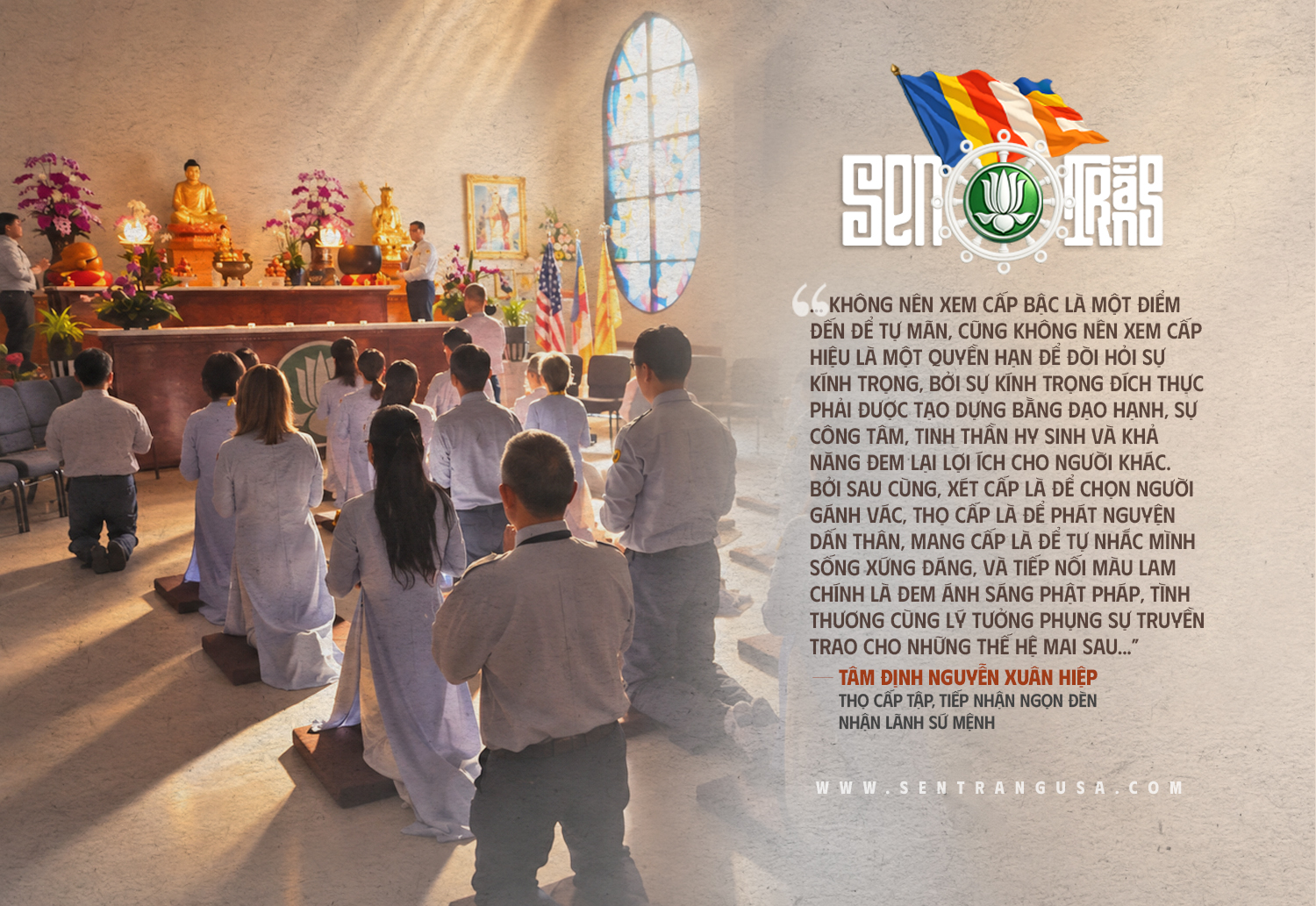
Nhìn lại những hình ảnh của buổi lễ, chúng ta bắt gặp nhiều khoảnh khắc đáng suy ngẫm: những Huynh trưởng trong màu áo Lam trang nghiêm trước Phật đài, những bàn tay chắp lại trong giờ phút phát nguyện, những ngọn nến được nâng niu, những trang nghi thức được thành kính trì tụng và những khoảnh khắc trao nhận, gắn cấp hiệu giữa các anh chị em. Tất cả có thể được cảm nhận như những biểu tượng sống động của sự trao truyền và tiếp nối. Ngọn nến gợi nhắc ánh sáng trí tuệ, bàn tay chắp lại biểu hiện sự cung kính và nhiếp tâm, còn việc trao nhận cấp hiệu nhắc nhở trách nhiệm của người đi trước đối với người tiếp nối. Trong tinh thần truyền đăng tục diệm, ánh sáng Phật pháp không dừng lại nơi một cá nhân, mà được tiếp tục lan tỏa qua từng thế hệ.
Đối với người Huynh trưởng GĐPT, sự trao truyền ấy không diễn ra trong nghi lễ, đồng thời còn hiện hữu trong những buổi sinh hoạt hằng tuần, trong bài Phật pháp dành cho Oanh Vũ, trong lần tập hát cho ngành Thiếu, trong những đêm trại, những giờ họp Ban Huynh trưởng và cả những lúc âm thầm giúp đỡ một đoàn sinh đang gặp khó khăn. Người Huynh trưởng có thể thọ nhận cấp hiệu trong khung cảnh trang nghiêm của chánh điện, nhưng ý nghĩa của lời phát nguyện chỉ thật sự được thể hiện khi người ấy trở về với đơn vị, tiếp tục kiên trì những công việc bình thường nhưng thiết yếu. Bởi nơi thọ cấp là đạo tràng, còn nơi thực hiện lời nguyện chính là cuộc sống.
V. Sứ mệnh đặc biệt của Huynh trưởng cấp Tập tại Hoa Kỳ
Nếu tại quê nhà, GĐPT đã có một truyền thống sinh hoạt lâu dài trong môi trường văn hóa Việt Nam, thì tại Hoa Kỳ, người Huynh trưởng phải đảm đương một trách nhiệm có phần khác biệt. Sự phát triển của GĐPT Việt Nam tại Hoa Kỳ gắn liền với hành trình định cư của cộng đồng người Việt và nỗ lực tái lập, duy trì các đơn vị áo Lam trên đất mới sau năm 1975. Ngày nay, trong môi trường đa văn hóa, người Huynh trưởng không những có nhiệm vụ hướng dẫn Phật pháp, mà còn phải góp phần nối kết các thế hệ, giúp thanh thiếu niên gốc Việt tìm thấy sự hòa hợp giữa căn tính văn hóa của mình và đời sống xã hội Hoa Kỳ. Đây là một sứ mệnh vừa cao đẹp vừa đầy thử thách.
Đối với nhiều đoàn sinh sinh trưởng tại Hoa Kỳ, tiếng Anh là ngôn ngữ chính trong học đường và giao tiếp xã hội. Việc sử dụng tiếng Việt, hiểu biết về truyền thống gia đình, lịch sử Phật giáo Việt Nam và văn hóa dân tộc có thể không còn tự nhiên như đối với những thế hệ đi trước. Người Huynh trưởng cấp Tập vì vậy cần có khả năng chuyển tải những giá trị truyền thống bằng phương pháp giáo dục thích hợp với thế hệ trẻ. Giữ gìn bản sắc Việt không có nghĩa là bắt các em sống như những thế hệ trước, mà quan trọng là giúp các em hiểu được giá trị của cội nguồn để từ đó tự nguyện trân trọng và tiếp nối. Dạy tiếng Việt không chỉ là dạy ngôn ngữ, mà còn là mở ra cánh cửa để các em hiểu lời ông bà, cha mẹ, những bài hát GĐPT và ý nghĩa của các nghi lễ Phật giáo. Cũng vậy, giảng dạy Phật pháp không đơn thuần chỉ là giúp đoàn sinh ghi nhớ giáo lý, mà còn hướng dẫn các em biết ứng dụng lòng từ bi, sự tỉnh thức, tinh thần trách nhiệm và khả năng phân biệt đúng sai trong cuộc sống hằng ngày.
Một trong những thách thức lớn của GĐPT tại Hoa Kỳ là duy trì hàng ngũ Huynh trưởng kế tục. Nhiều đơn vị phải đối diện với tình trạng thiếu nhân sự, khoảng cách địa lý, áp lực công việc, học hành, gia đình và những thay đổi trong nhu cầu sinh hoạt của giới trẻ. Trong hoàn cảnh ấy, người Huynh trưởng cấp Tập cần nhận thức rằng sự phát triển của tổ chức không thể chỉ dựa vào lòng nhiệt thành của các thế hệ tiền bối. Thọ cấp Tập phải đi liền với sự sẵn sàng nhận việc, nhận trách nhiệm và đào tạo người kế tiếp mình, bởi một đơn vị vững mạnh không phải là đơn vị có đông đoàn sinh hôm nay, mà còn là nơi có thể đào luyện những đoàn sinh trở thành Huynh trưởng trong tương lai. Mỗi người thọ cấp Tập cần tự hỏi trong những năm sắp tới mình sẽ giúp được bao nhiêu đoàn sinh trưởng thành và góp phần đào tạo những ai đủ khả năng tiếp nối công việc đang đảm trách. Đó là thước đo có ý nghĩa hơn nhiều so với số năm mang cấp hiệu.
Trong xã hội Hoa Kỳ, việc giáo dục thanh thiếu niên còn đòi hỏi sự kết hợp giữa truyền thống Phật giáo với những phương pháp giáo dục hiện đại. Người Huynh trưởng cần biết lắng nghe, đối thoại, tôn trọng sự khác biệt, bảo vệ an toàn của trẻ em và xây dựng môi trường sinh hoạt lành mạnh, bao dung. Bi không chỉ là tình thương dành cho đoàn sinh, mà còn là khả năng thấu hiểu hoàn cảnh và những khó khăn của các em; Trí không giới hạn là kiến thức Phật học, mà còn là sự hiểu biết về tâm lý, phương pháp giáo dục, đời sống xã hội và khả năng vận dụng phương tiện thích hợp; còn Dũng không những là sự hăng hái nhận công việc, mà còn là bản lĩnh vượt qua trở ngại, dám nhận trách nhiệm, sửa chữa sai lầm và bảo vệ những giá trị đúng đắn. Người Huynh trưởng cấp Tập cần làm cho Bi – Trí – Dũng trở thành phẩm chất hiện hữu trong từng hành động.
VI. Thọ cấp Tập – Khởi đầu của một trách nhiệm lớn hơn
Đối với một tổ chức giáo dục có truyền thống như GĐPT Việt Nam, sự kế thừa vừa là chuyển giao công việc từ người lớn tuổi sang người trẻ tuổi, vừa là sự trao truyền lý tưởng, kinh nghiệm, đạo hạnh và tình thương. Thế hệ tiền bối đã dành nhiều năm tháng để xây dựng tổ chức, duy trì sinh hoạt, đào luyện Huynh trưởng và giữ gìn ngọn lửa Sen Trắng qua những biến động lịch sử. Thế hệ hôm nay có bổn phận trân trọng công lao ấy, không phải bằng cách chỉ nhắc nhớ quá khứ, mà bằng những việc làm thiết thực để tổ chức tiếp tục phát triển.
Trong bối cảnh GĐPT Việt Nam tại Hoa Kỳ, trách nhiệm ấy càng trở nên cấp thiết. Chúng ta cần những Huynh trưởng không chỉ yêu mến màu áo Lam, mà còn có khả năng tổ chức, giảng dạy, hướng dẫn và thích ứng; những người biết tôn trọng truyền thống nhưng không ngại đổi mới phương pháp; những tấm gương biết đặt lợi ích giáo dục đoàn sinh và sự hòa hợp của tập thể lên trên những khác biệt cá nhân. Bởi lẽ, một tổ chức không thể phát triển vững bền chỉ nhờ những nghi lễ trang nghiêm, những kỳ đại hội thành công hoặc những hình ảnh đẹp. Tất cả những điều đó chỉ thật sự có ý nghĩa khi được tiếp nối bằng sự trưởng thành của con người. Sự thành tựu của một lễ thọ cấp vì thế không những được nhìn thấy trong ngày cử hành, mà còn ở những năm tháng phụng sự sau đó.
VII. Từ lời phát nguyện hôm nay đến hành động ngày mai
Nhìn lại những hình ảnh lưu niệm của buổi lễ, bên cạnh sự trang nghiêm còn có những nụ cười, những cái nắm tay và niềm vui của tình Lam. Những hình ảnh ấy nhắc chúng ta rằng hành trình Huynh trưởng tuy nhiều trách nhiệm nhưng không phải là hành trình đơn độc. Mỗi Huynh trưởng được nâng đỡ bằng tình thương của anh chị em, bằng sự dìu dắt của các bậc trưởng thượng, bằng niềm tin của đoàn sinh và bằng lý tưởng chung của tổ chức. Chính vì vậy, người thọ cấp Tập cần giữ cho mình tâm thế khiêm cung của người học đạo, tinh thần cầu tiến của người đang rèn luyện và nghị lực của người phát nguyện phụng sự.
Không nên xem cấp bậc là một điểm đến để tự mãn, cũng không nên xem cấp hiệu là một quyền hạn để đòi hỏi sự kính trọng, bởi sự kính trọng đích thực phải được tạo dựng bằng đạo hạnh, sự công tâm, tinh thần hy sinh và khả năng đem lại lợi ích cho người khác. Một người Huynh trưởng cấp Tập xứng đáng không nhất thiết phải là người nói hay nhất, nổi bật nhất hoặc đảm nhiệm nhiều chức vụ nhất, mà có thể là người luôn có mặt đúng giờ sinh hoạt, kiên nhẫn hướng dẫn một Oanh Vũ còn rụt rè, dành thời gian chuẩn bị bài học sau những giờ làm việc, biết nhận lỗi, biết hòa giải và không bỏ cuộc khi đơn vị gặp khó khăn. Những việc làm thầm lặng ấy mới chính là nơi lời phát nguyện được nuôi dưỡng và thành tựu.
VIII. Kết luận – Cấp hiệu nhỏ, tâm nguyện lớn
Giữa khung cảnh trang nghiêm của Phật đài, trong ánh sáng của những ngọn nến và giữa sự chứng kiến của tình Lam, người Huynh trưởng đón nhận cấp Tập với tất cả lòng thành kính, đồng thời cũng bắt đầu một hành trình mới. Hành trình ấy không được đo bằng số lần tham dự đại hội, số chứng chỉ đã nhận hay những cấp hiệu được mang trên đồng phục, mà bằng sự chuyển hóa của chính bản thân và những lợi ích người Huynh trưởng có thể đem đến cho đoàn sinh, đơn vị và cộng đồng.
Đối với GĐPT Việt Nam tại Hoa Kỳ, mỗi Huynh trưởng thọ cấp Tập hôm nay còn mang theo một niềm kỳ vọng đặc biệt: trở thành nhịp cầu giữa truyền thống và tương lai, giữa các thế hệ người Việt, giữa tinh thần Phật giáo và cuộc sống hiện đại. Đó là sứ mệnh tiếp nối ngọn đèn Chánh pháp, giữ gìn lý tưởng Bi – Trí – Dũng và góp phần nuôi dưỡng những thế hệ Phật tử chân chánh trên quê hương thứ hai. Mong rằng mỗi người Huynh trưởng sau ngày thọ cấp sẽ luôn tự nhắc mình rằng hôm nay được tổ chức tín nhiệm trao thêm trách nhiệm thì ngày mai phải sống và phụng sự như thế nào để xứng đáng với niềm tin ấy.
Bởi sau cùng, xét cấp là để chọn người gánh vác, thọ cấp là để phát nguyện dấn thân, mang cấp là để tự nhắc mình sống xứng đáng, và tiếp nối màu Lam chính là đem ánh sáng Phật pháp, tình thương cùng lý tưởng phụng sự truyền trao cho những thế hệ mai sau.
Sen trắng vẫn nở trên đất mới. Ánh đèn lý tưởng Lam vẫn tiếp tục sáng, khi còn những người Huynh trưởng biết sống vì đàn em, vì Đạo pháp và vì tương lai của Gia Đình Phật Tử Việt Nam.
Phật lịch 2570 – San Diego, CA 12.11.2026
TÂM ĐỊNH Nguyễn Xuân Hiệp
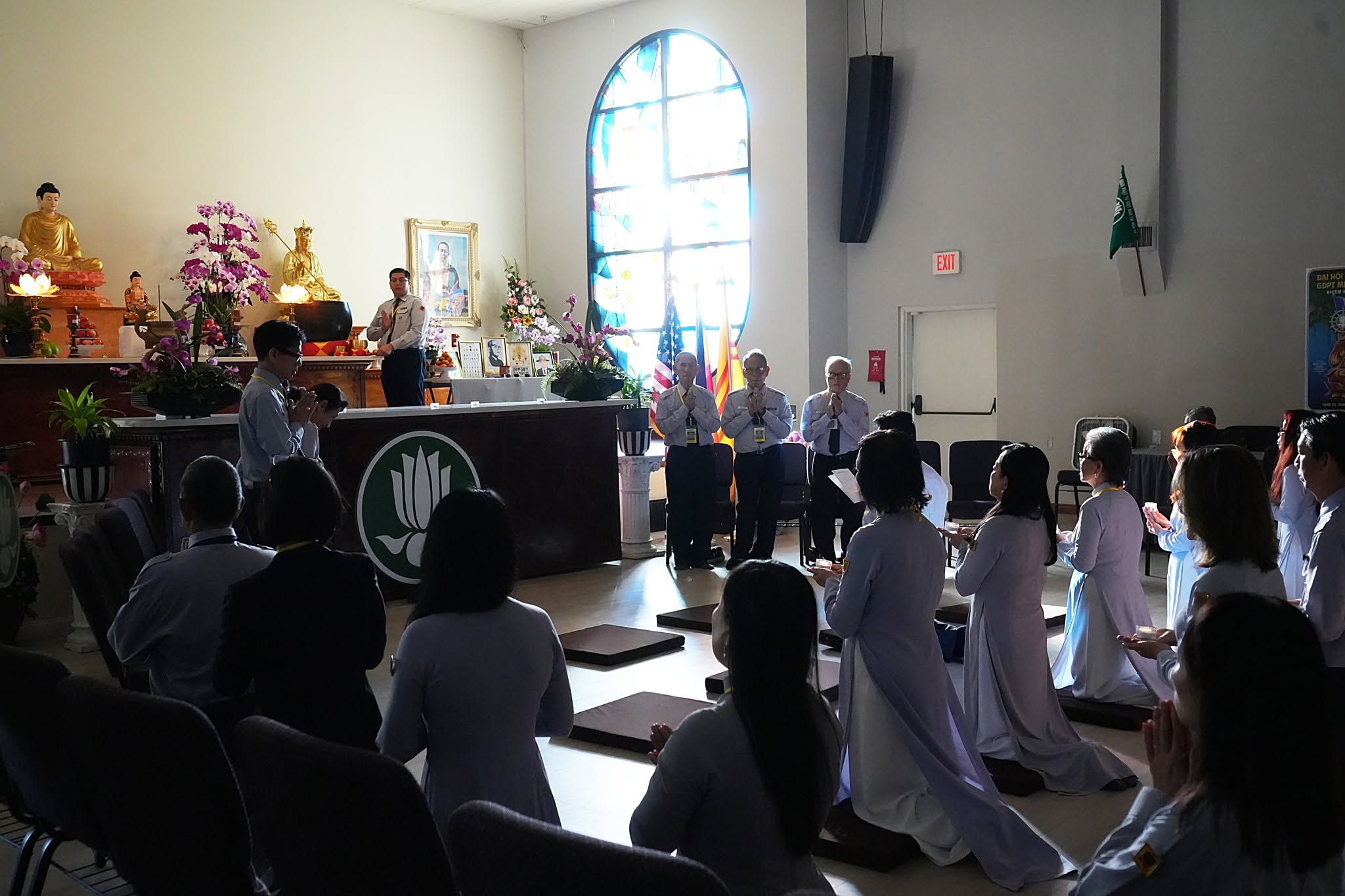
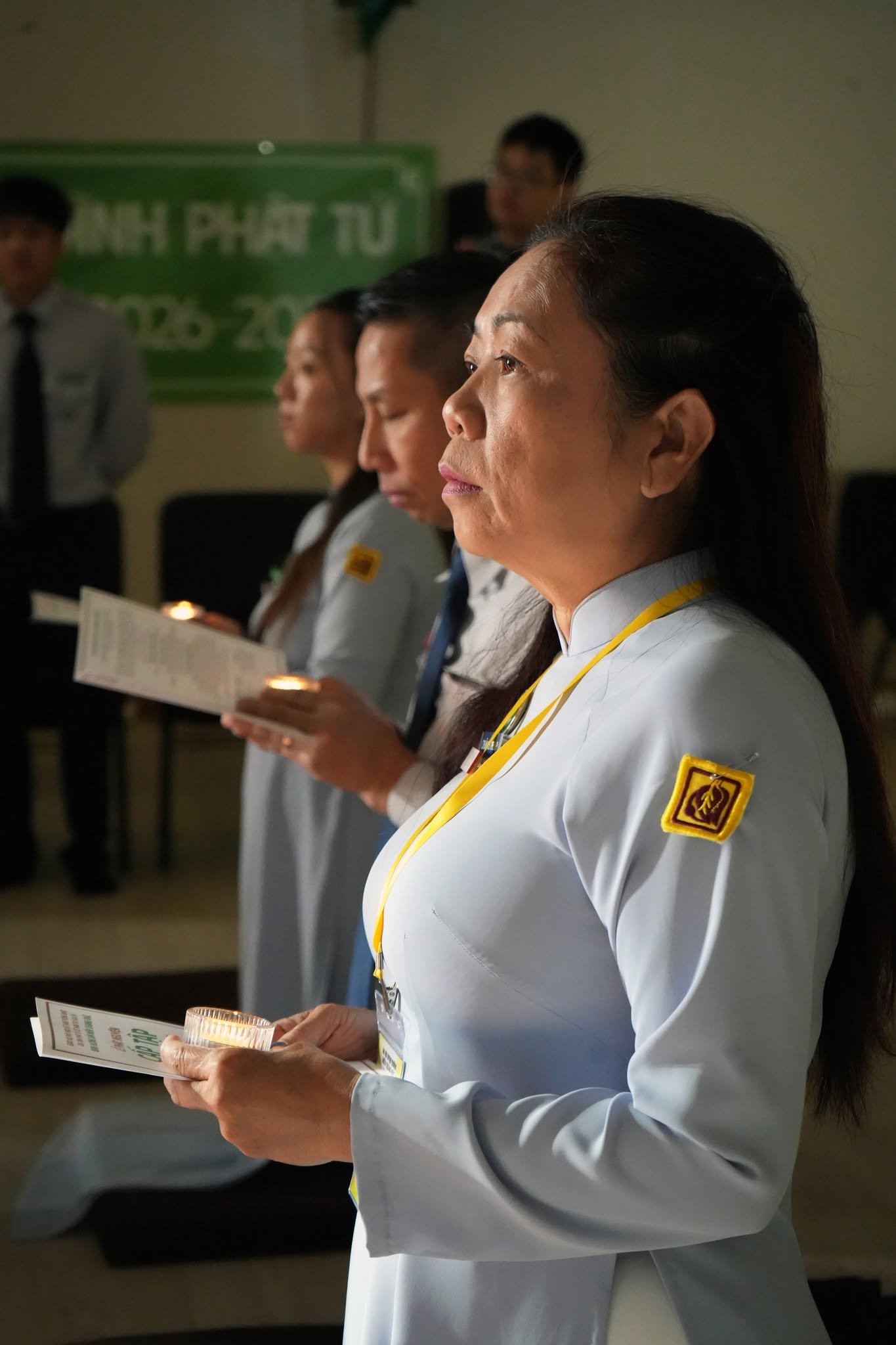
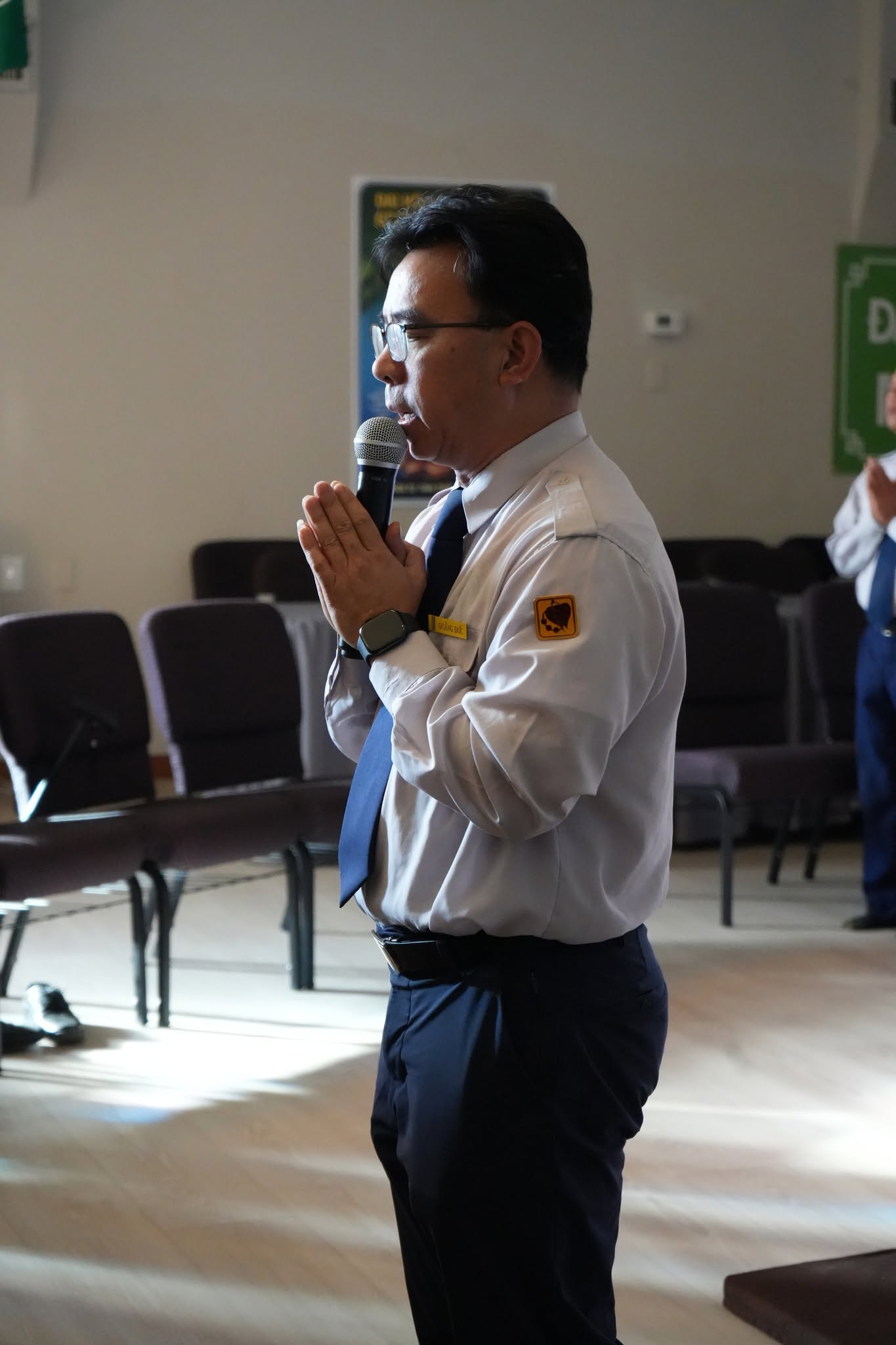
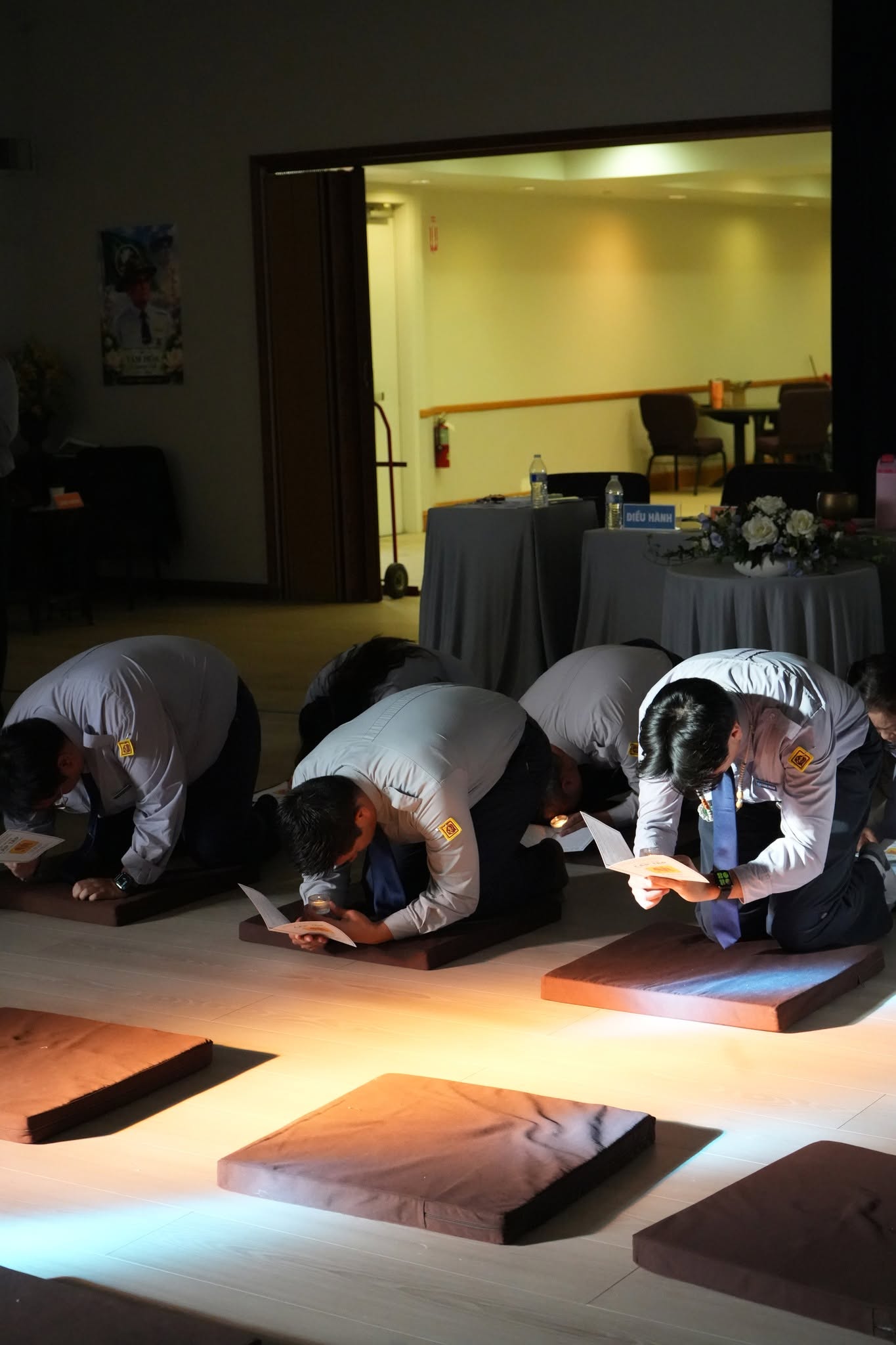
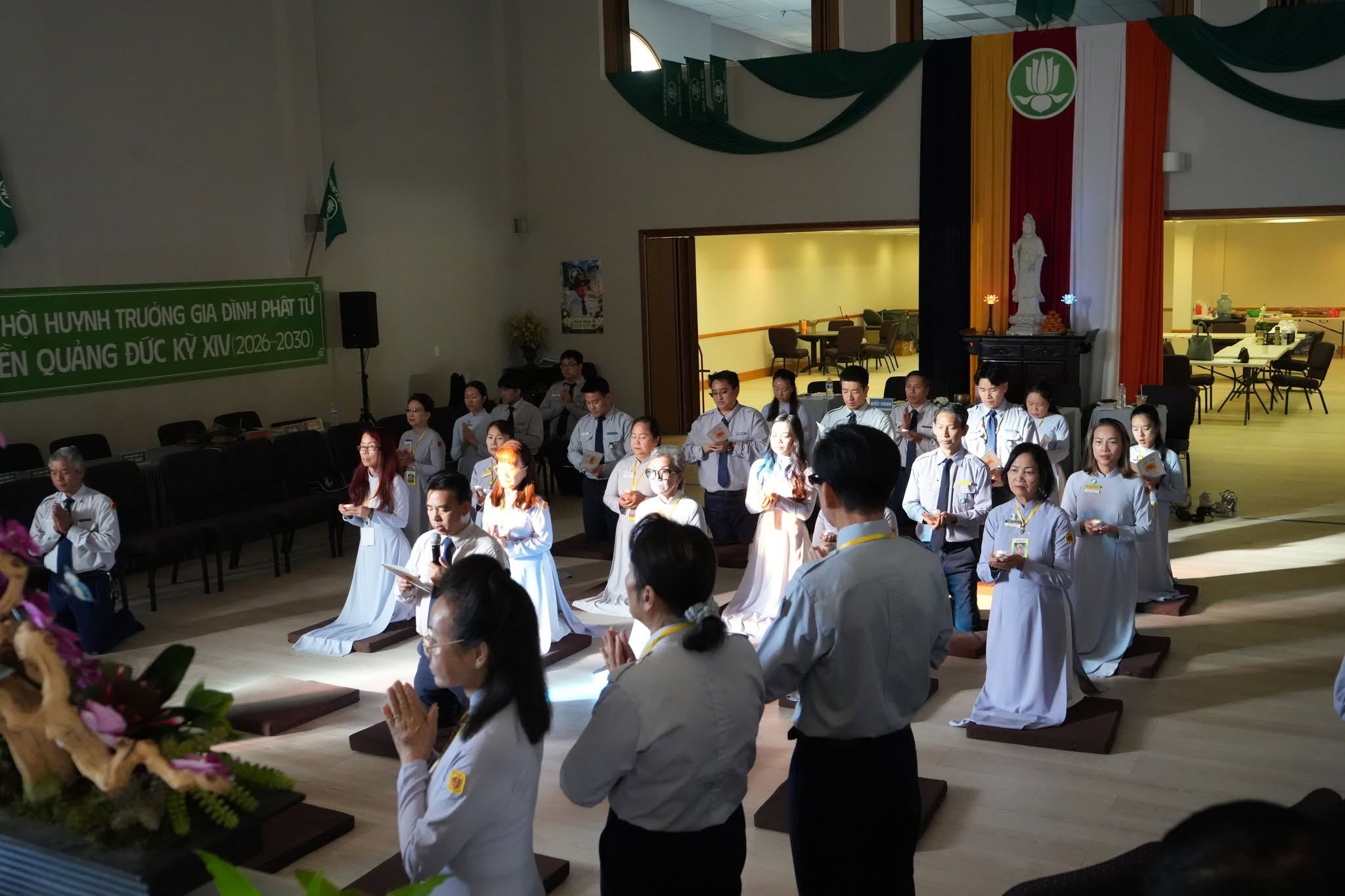
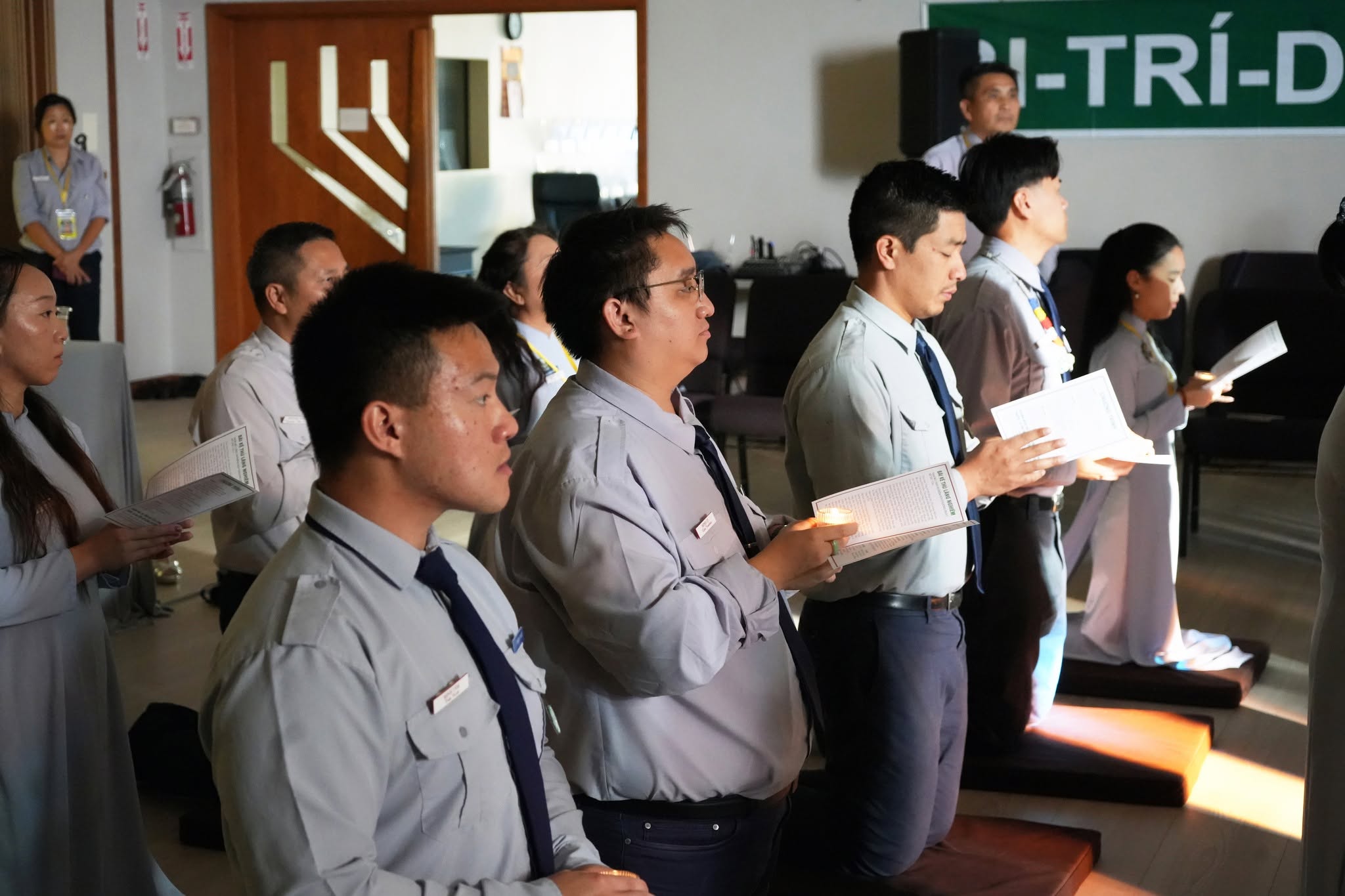

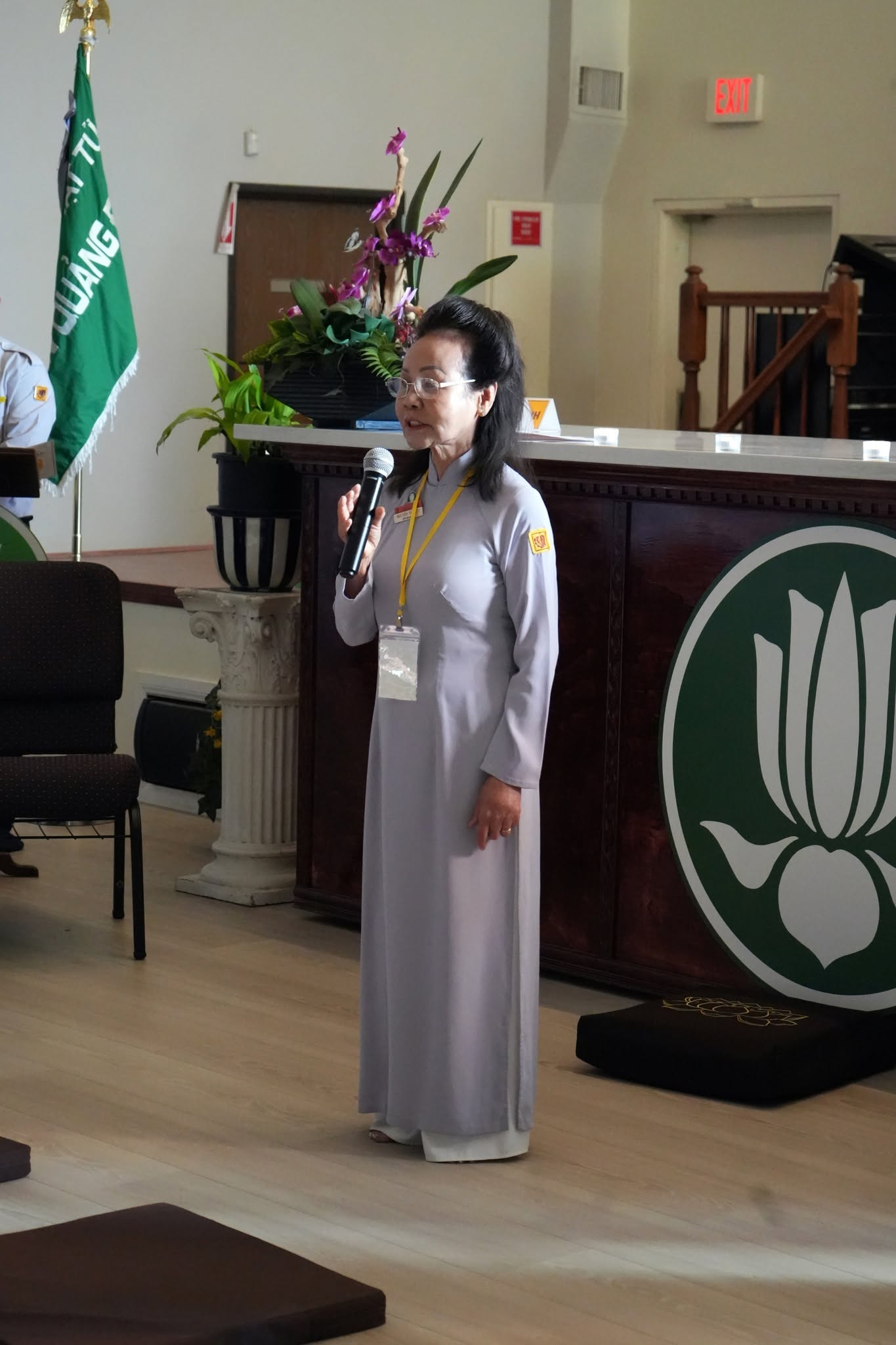
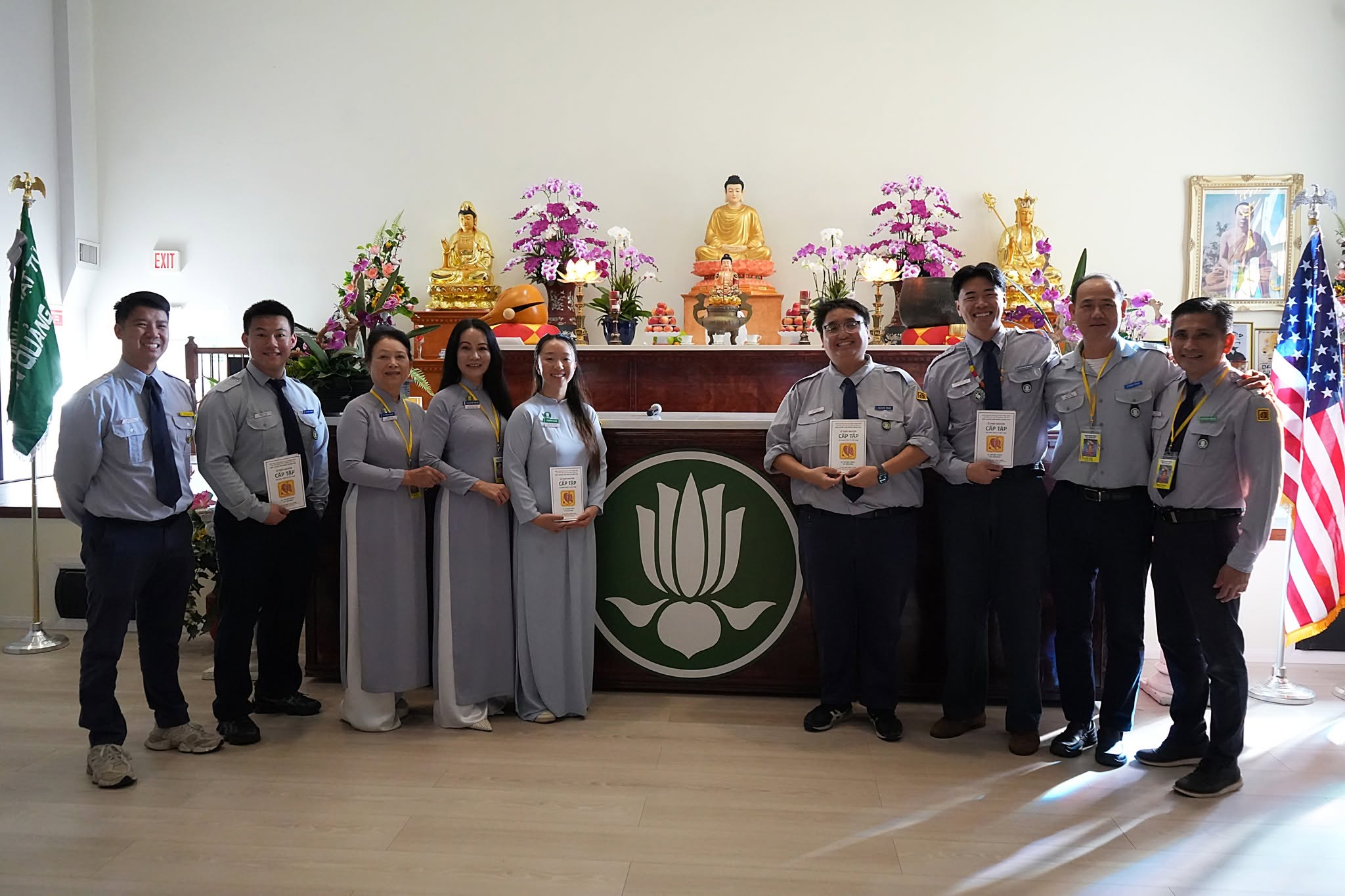
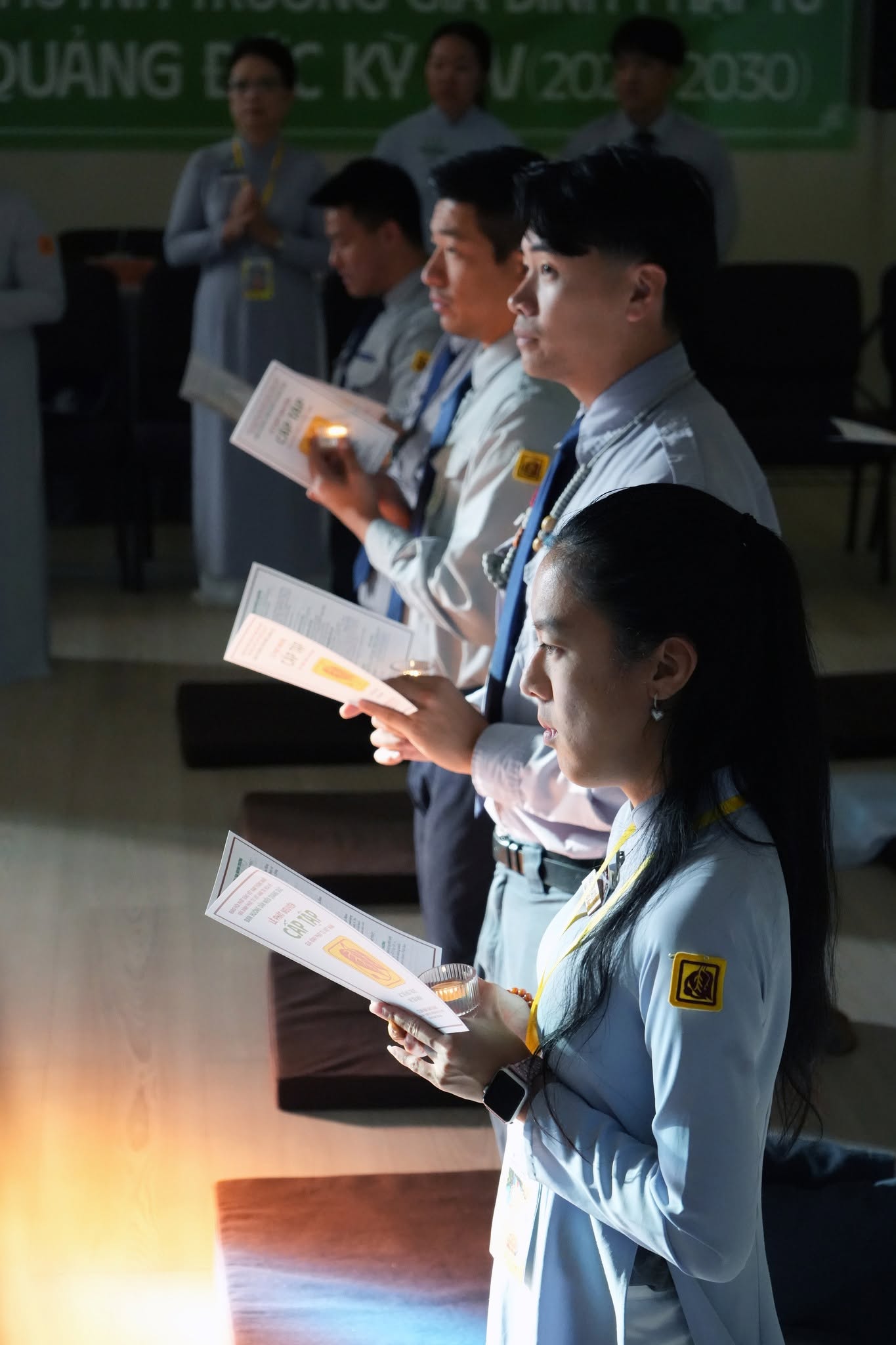
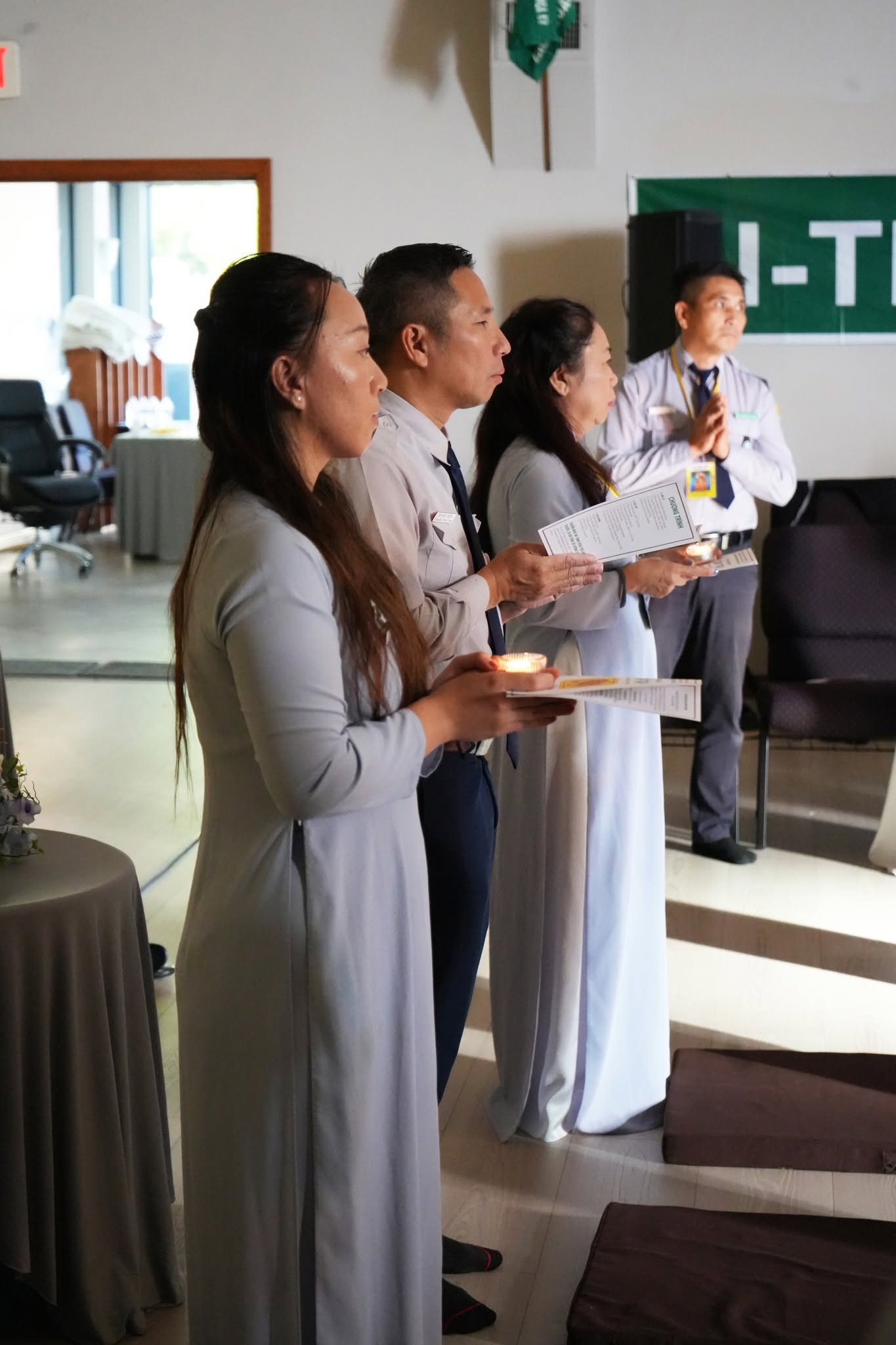
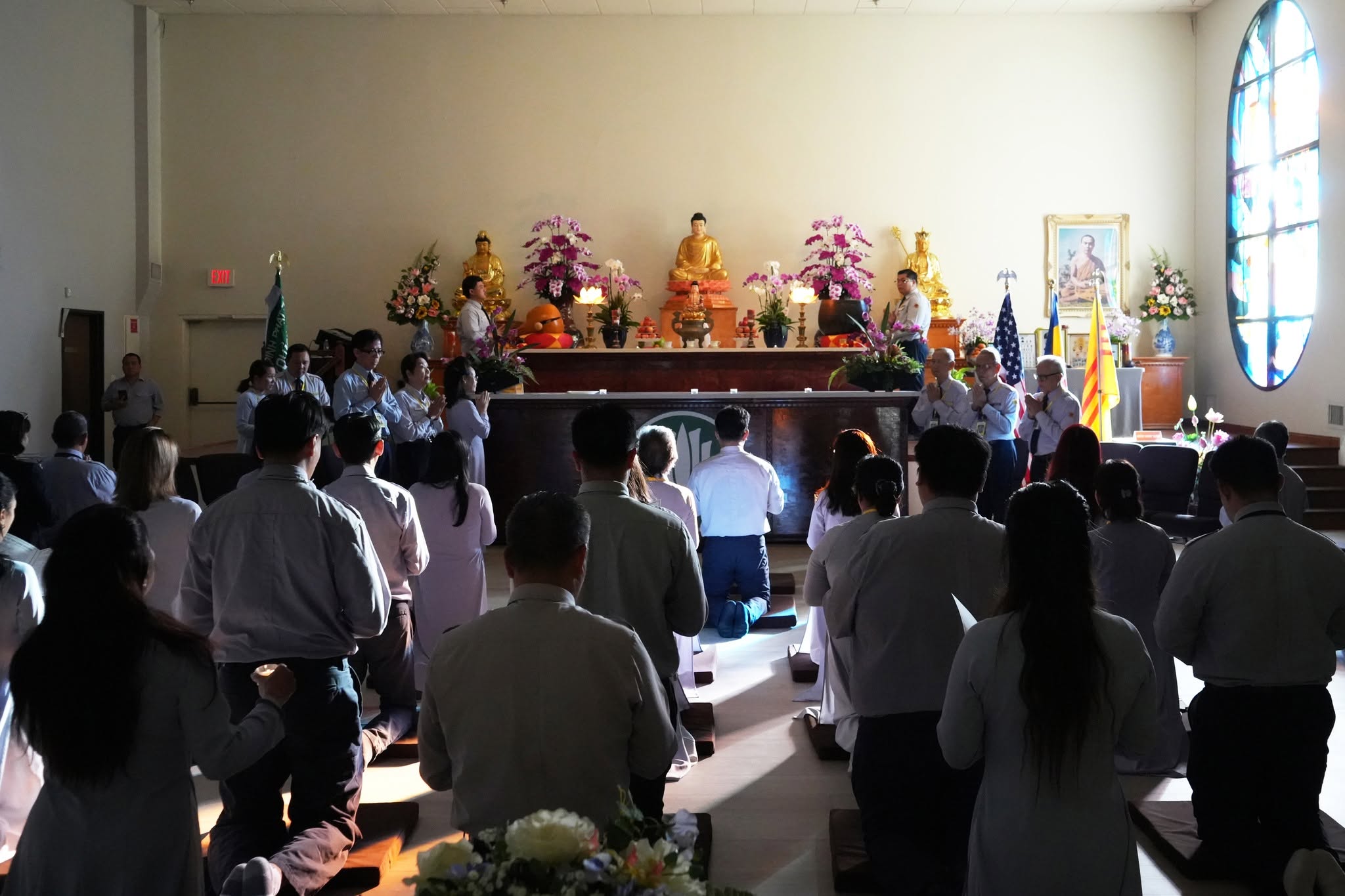
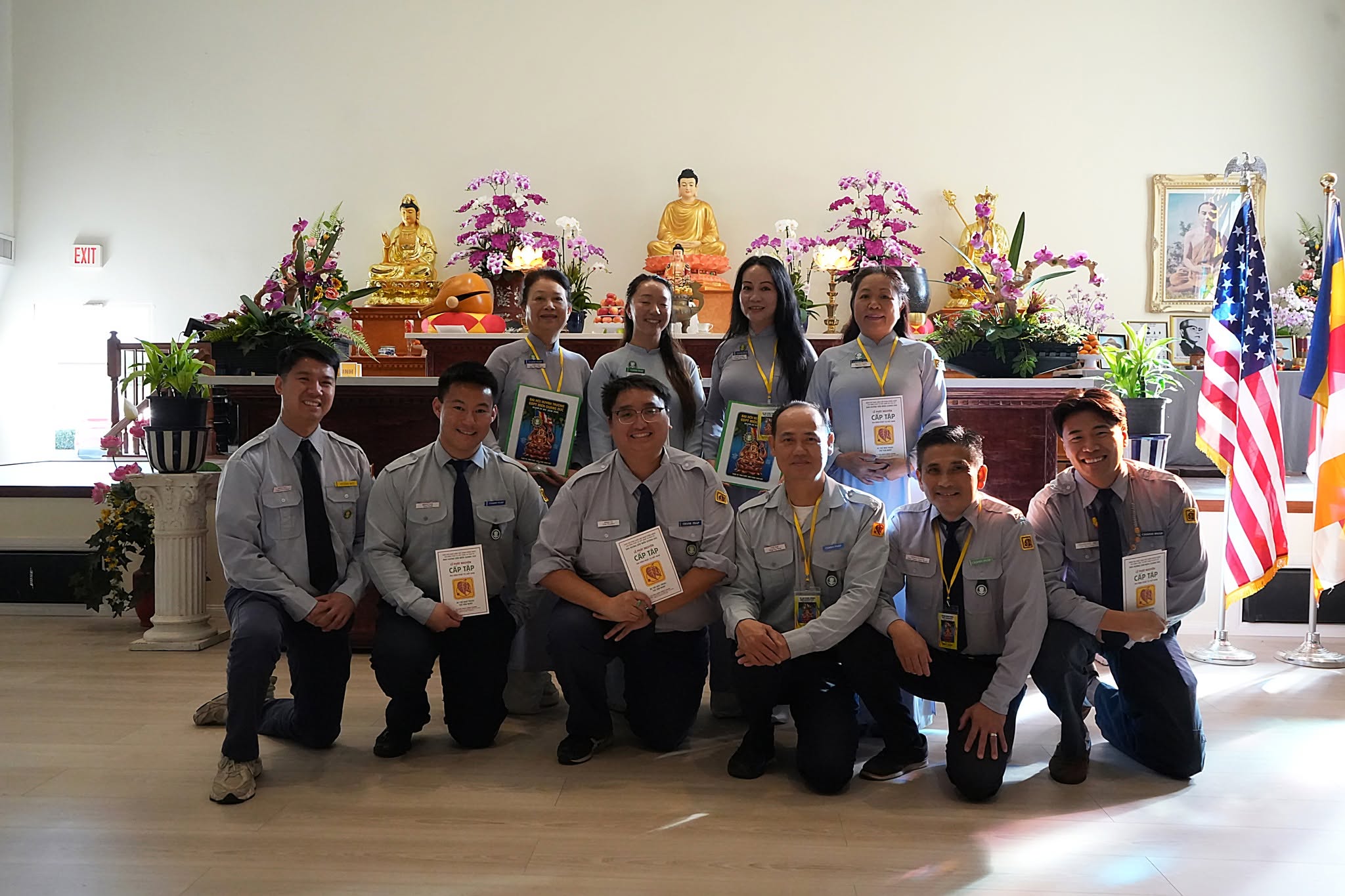
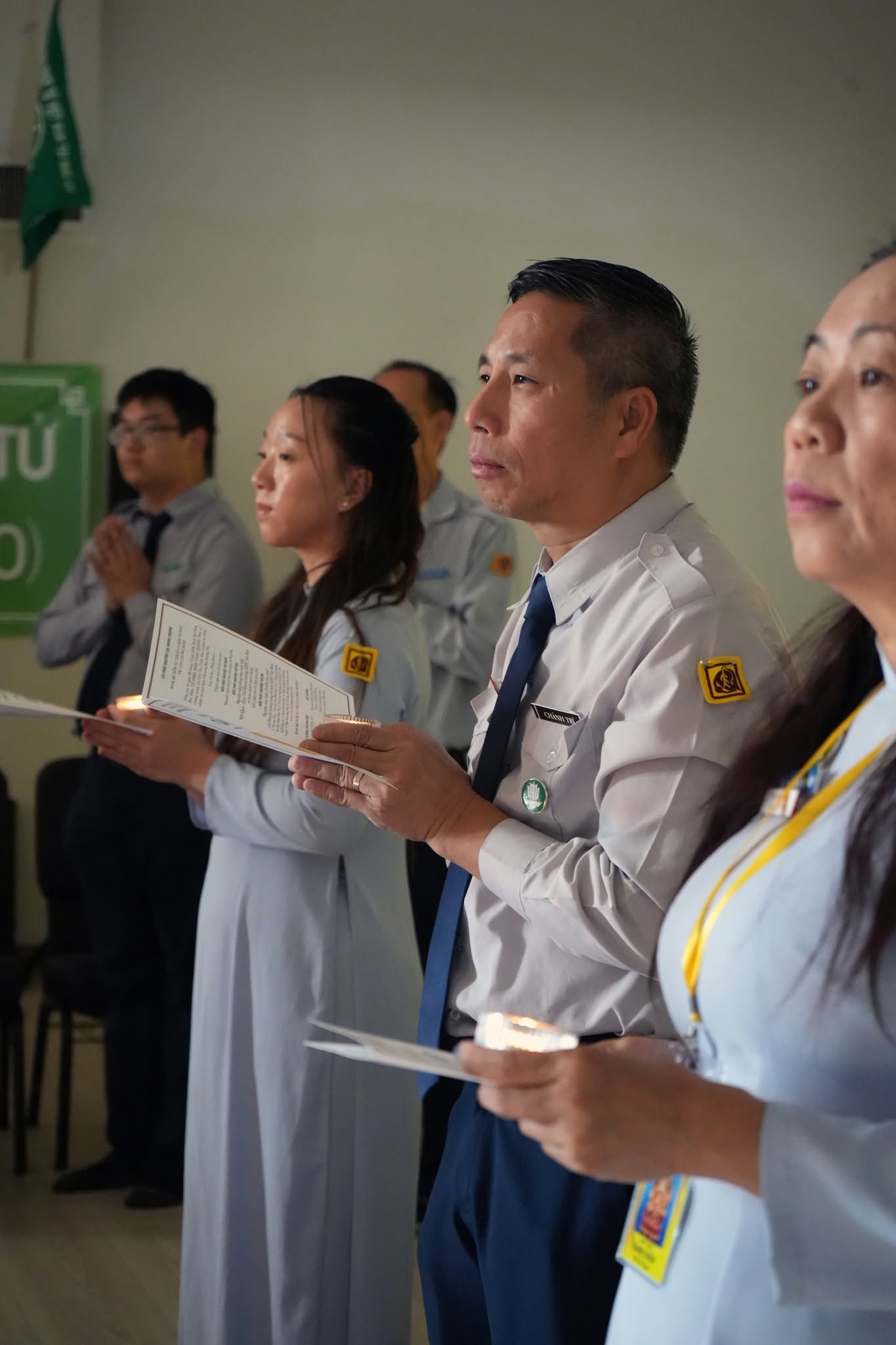

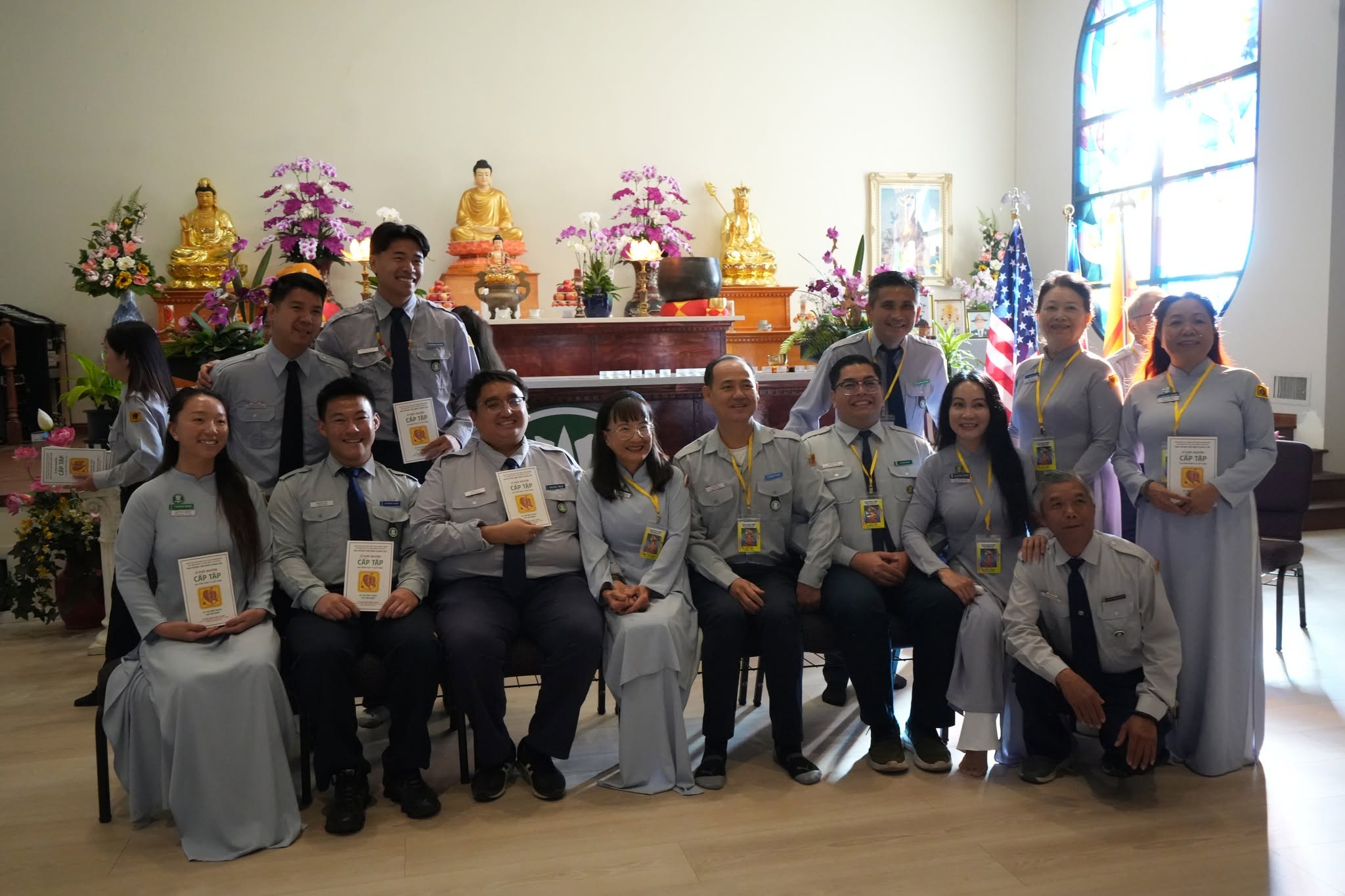
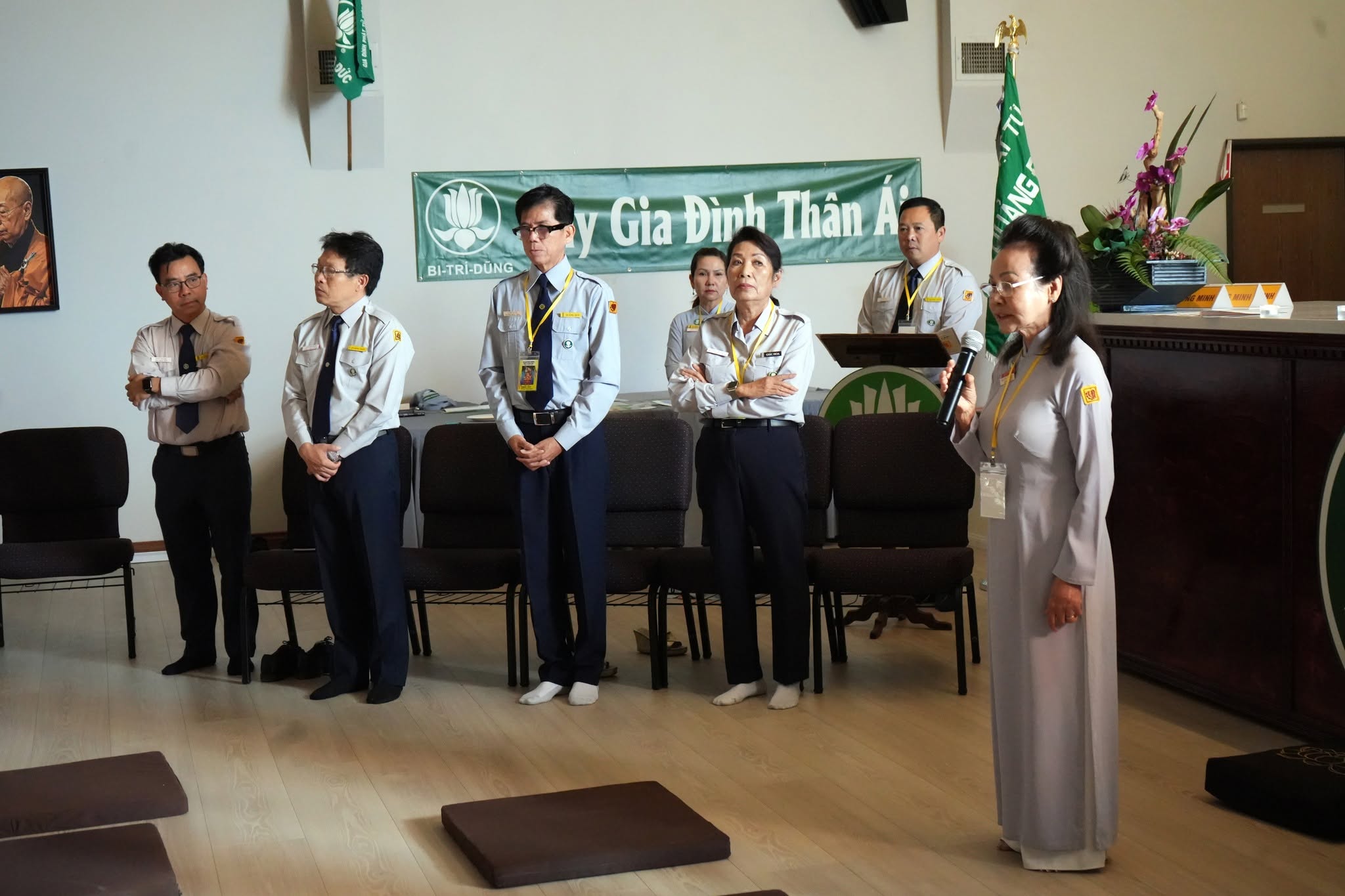
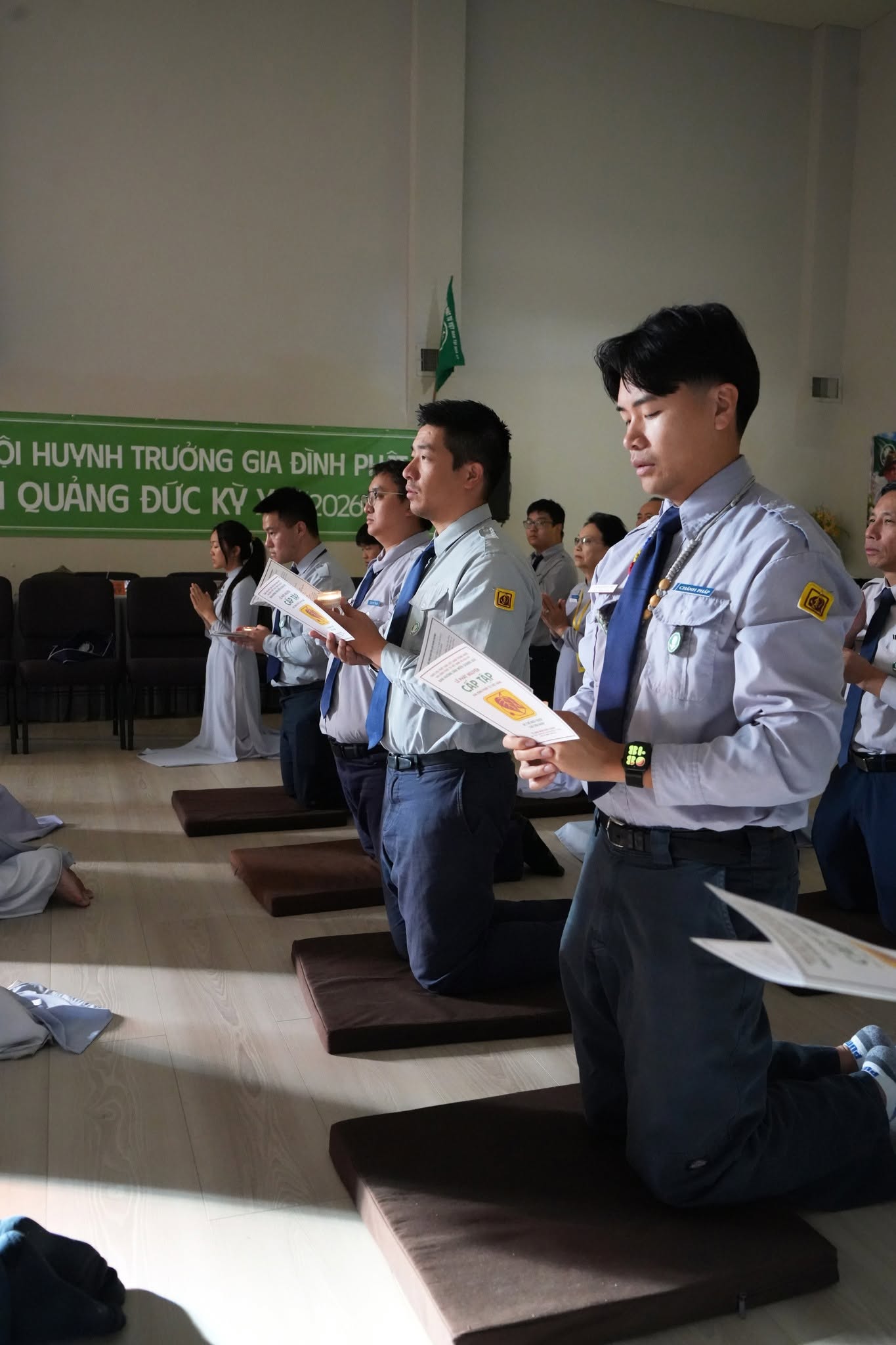
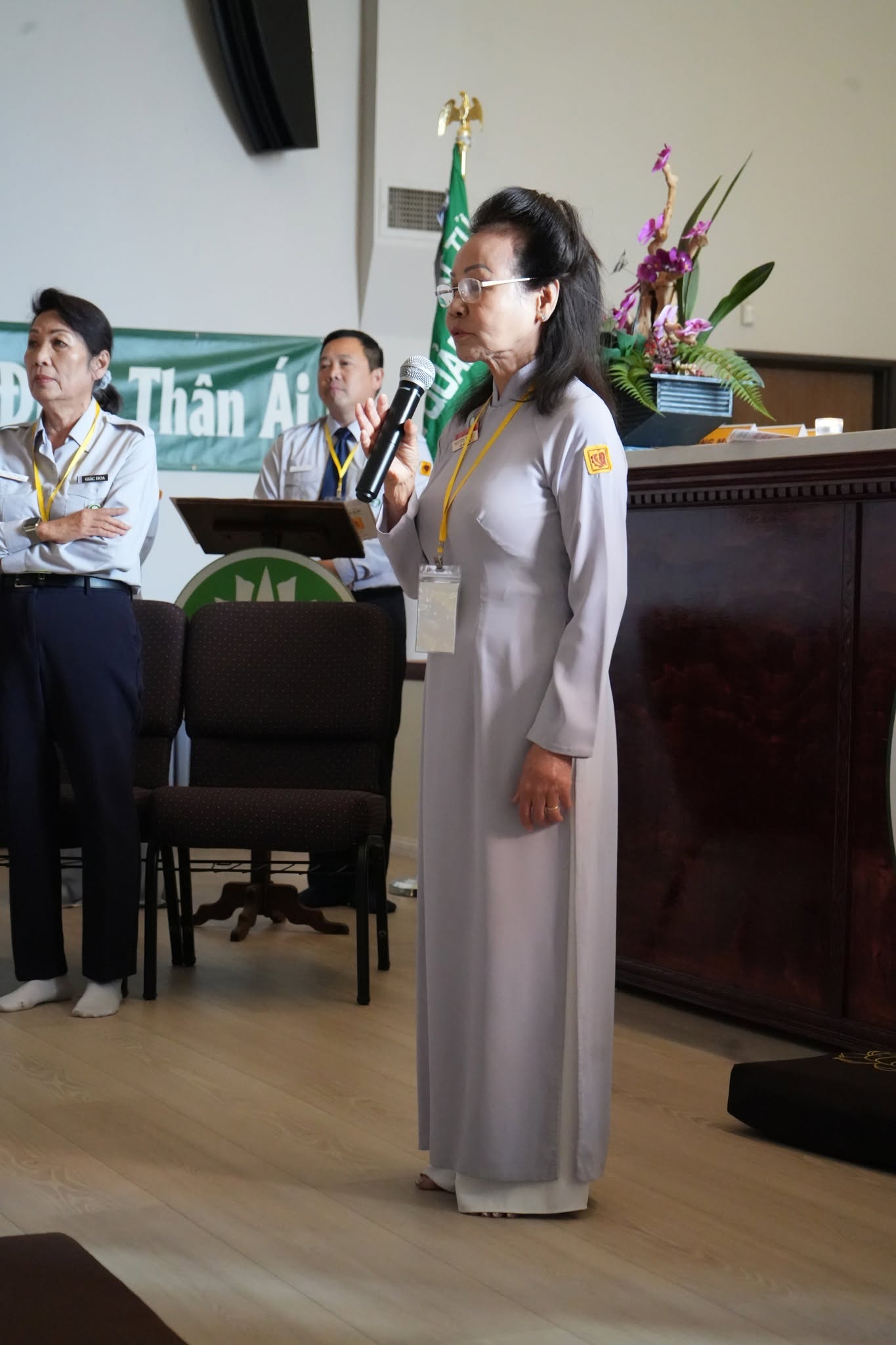
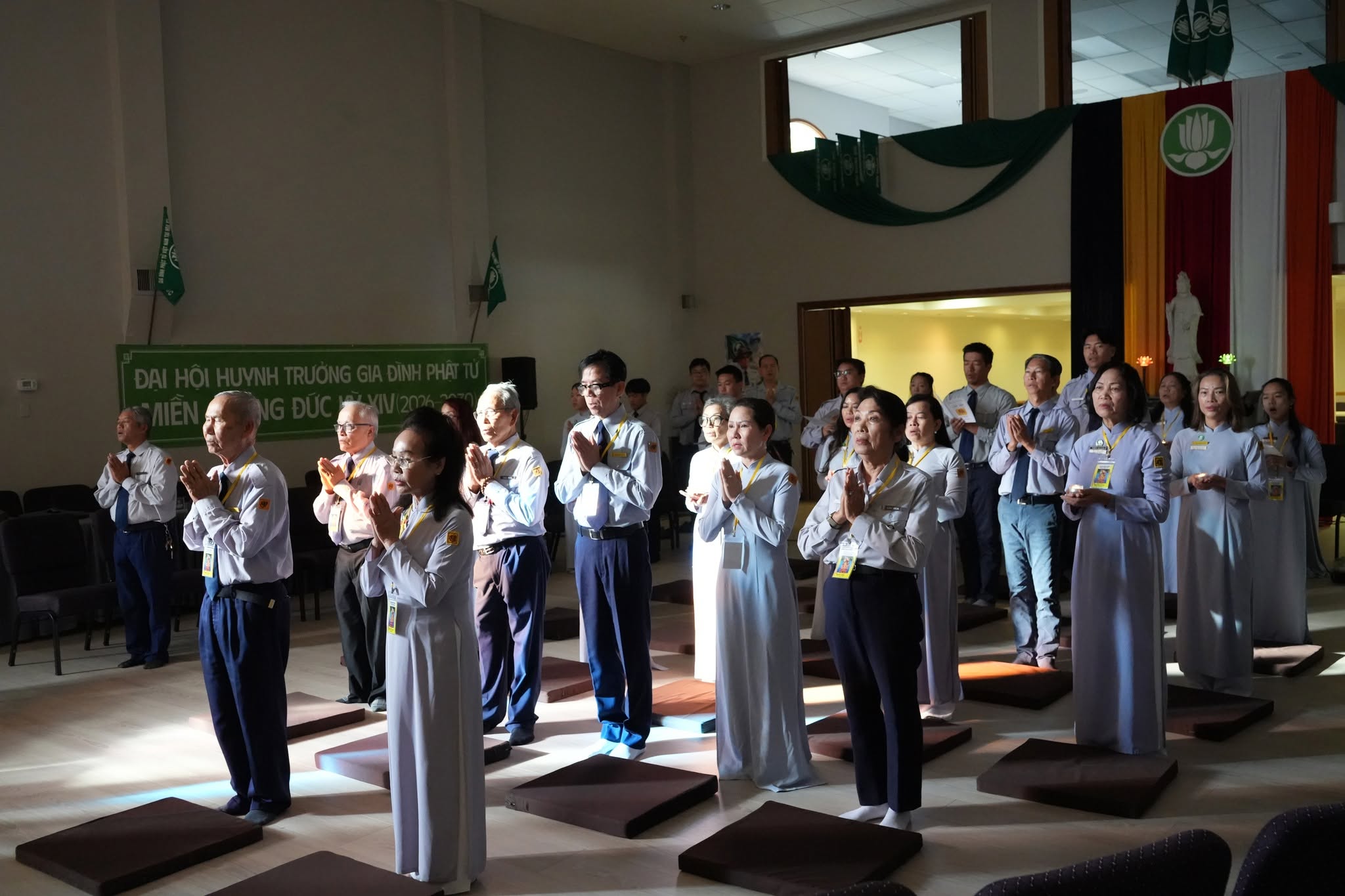
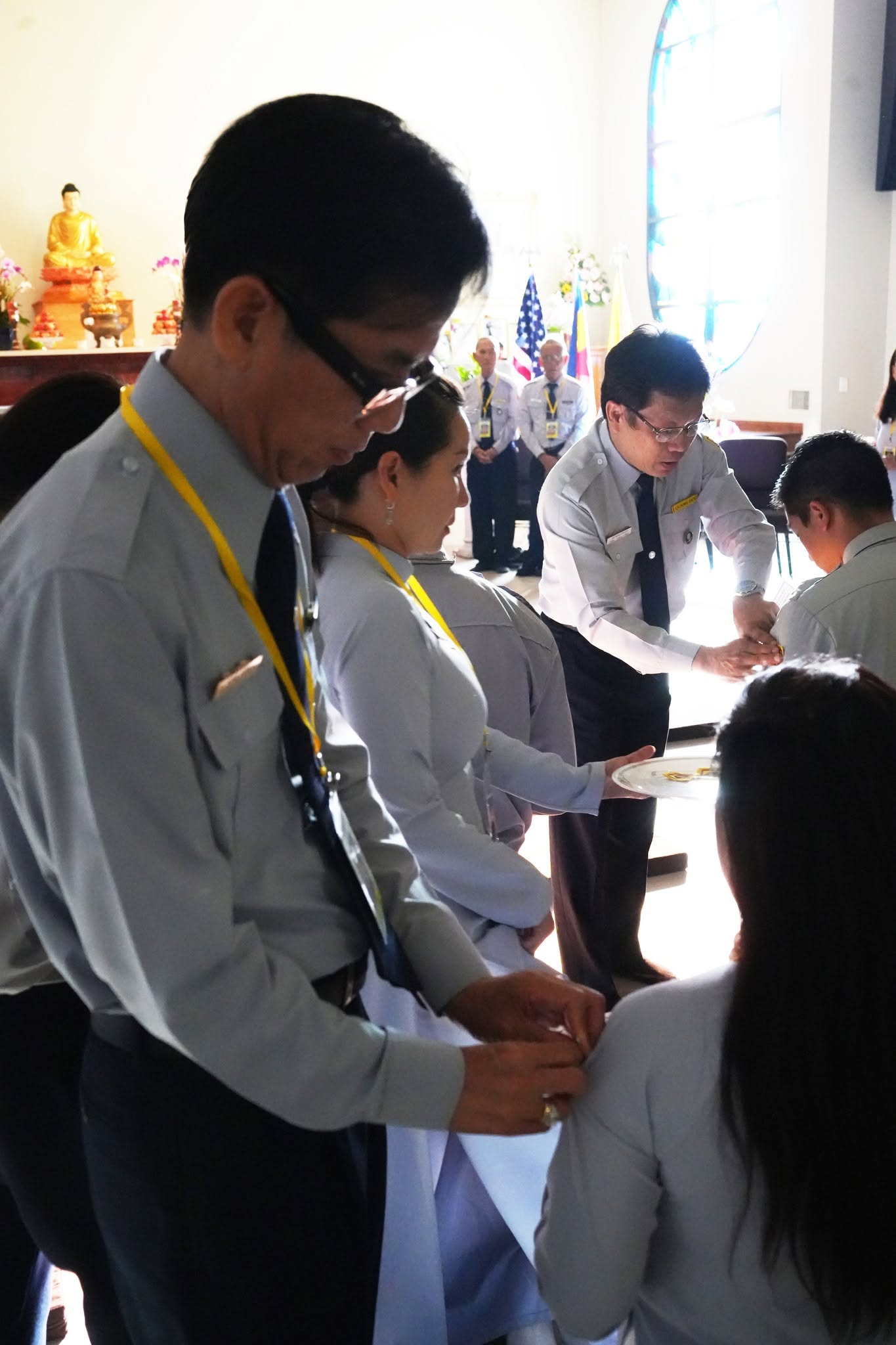

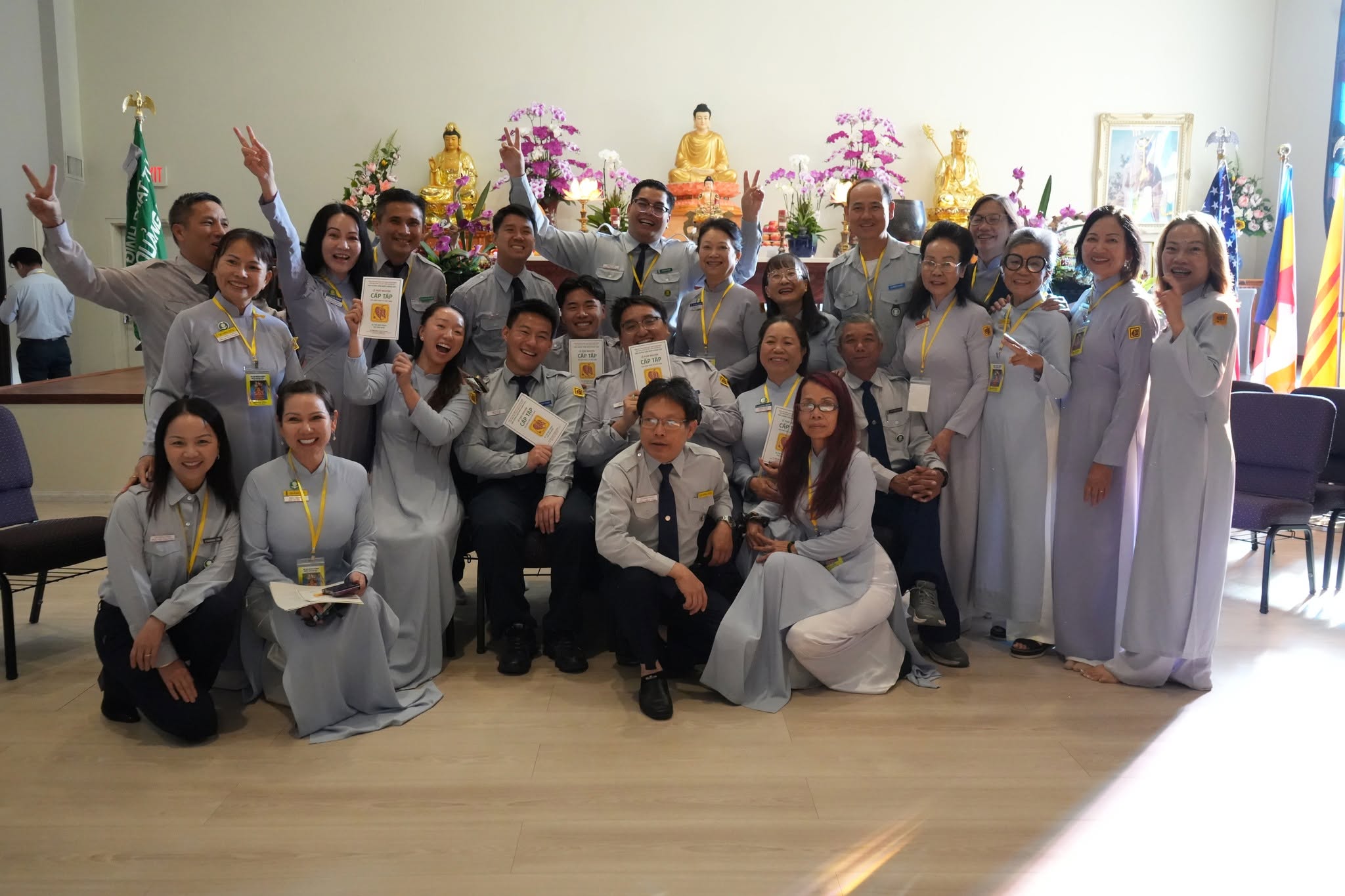
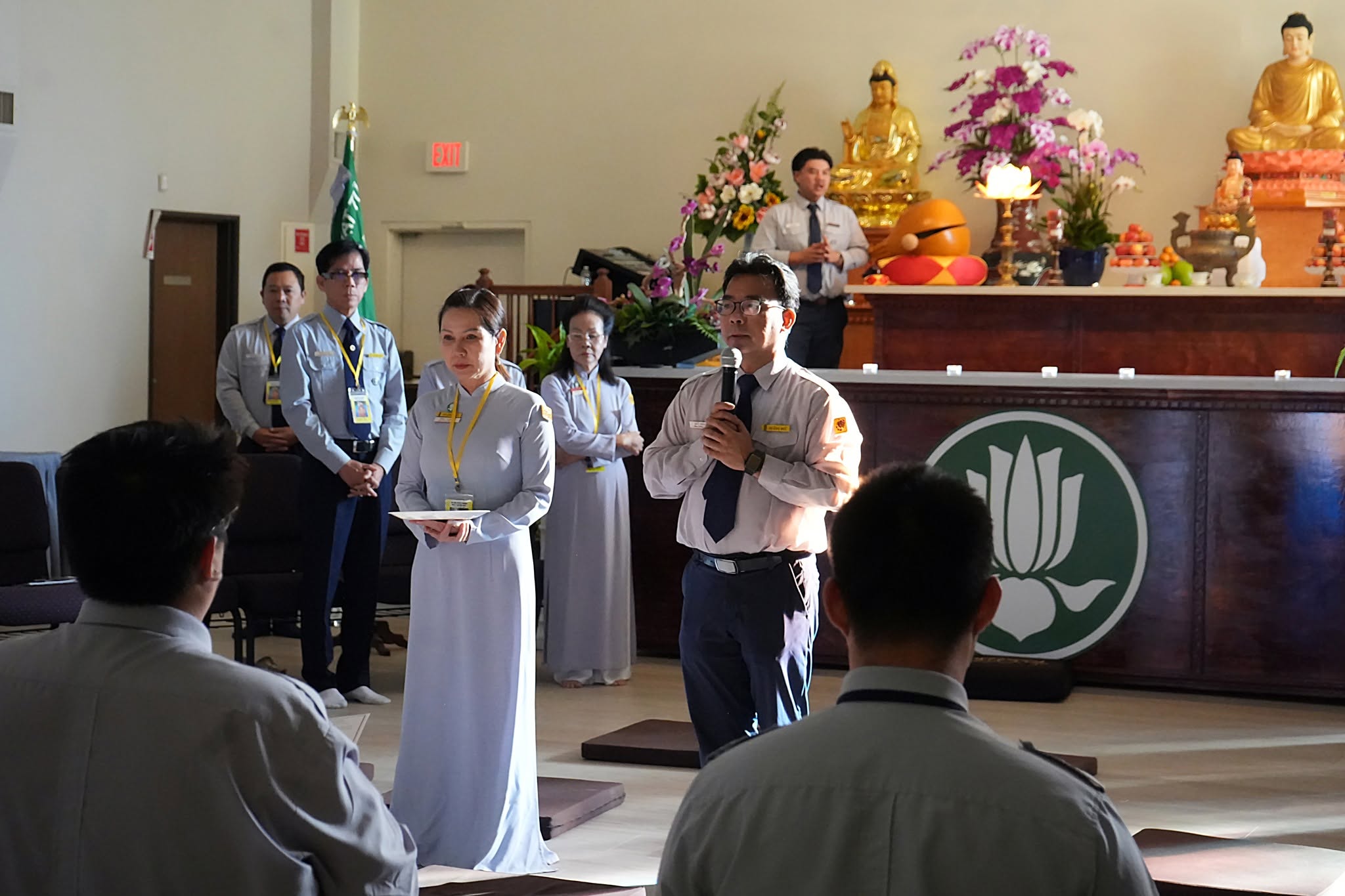
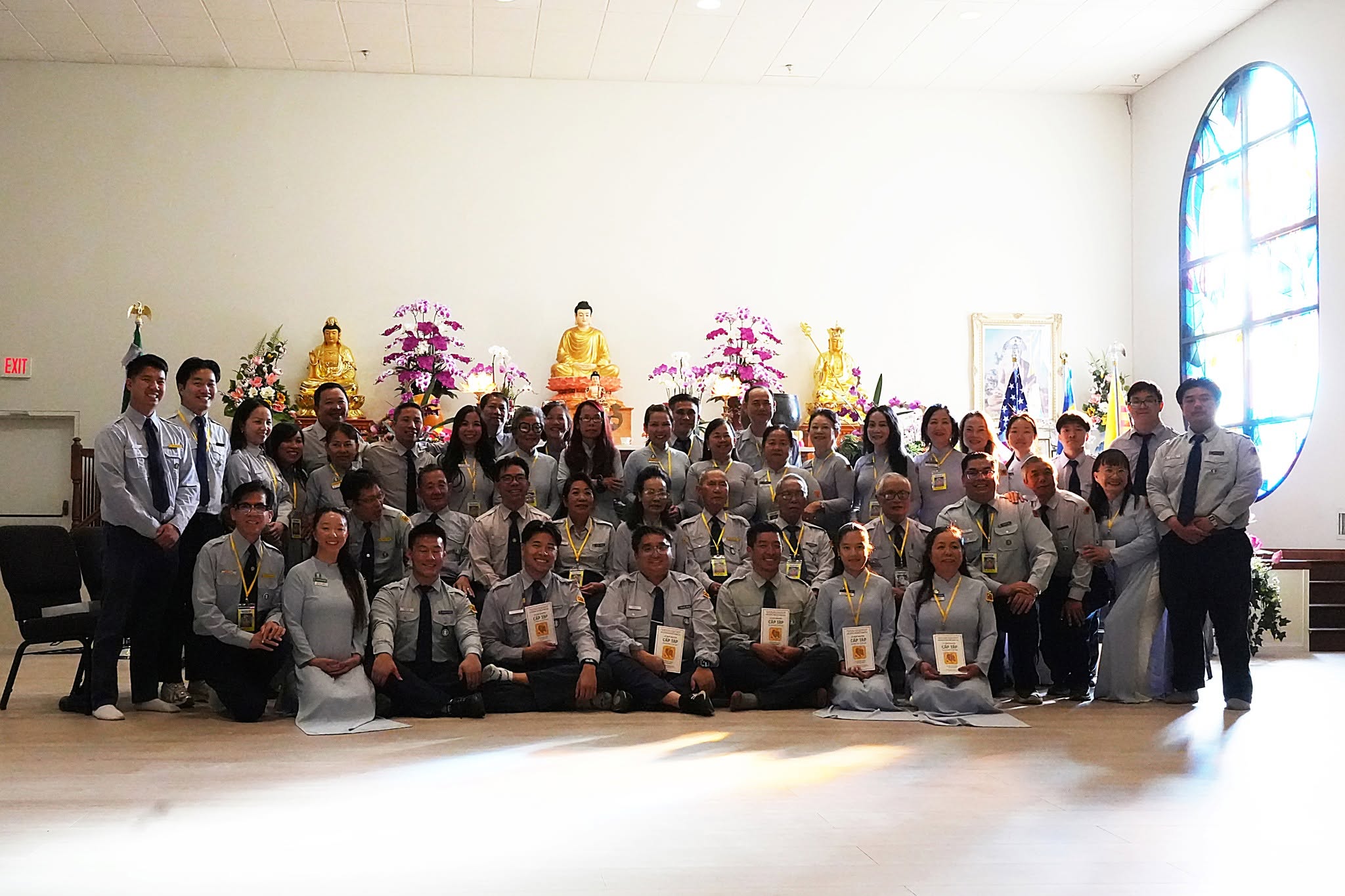
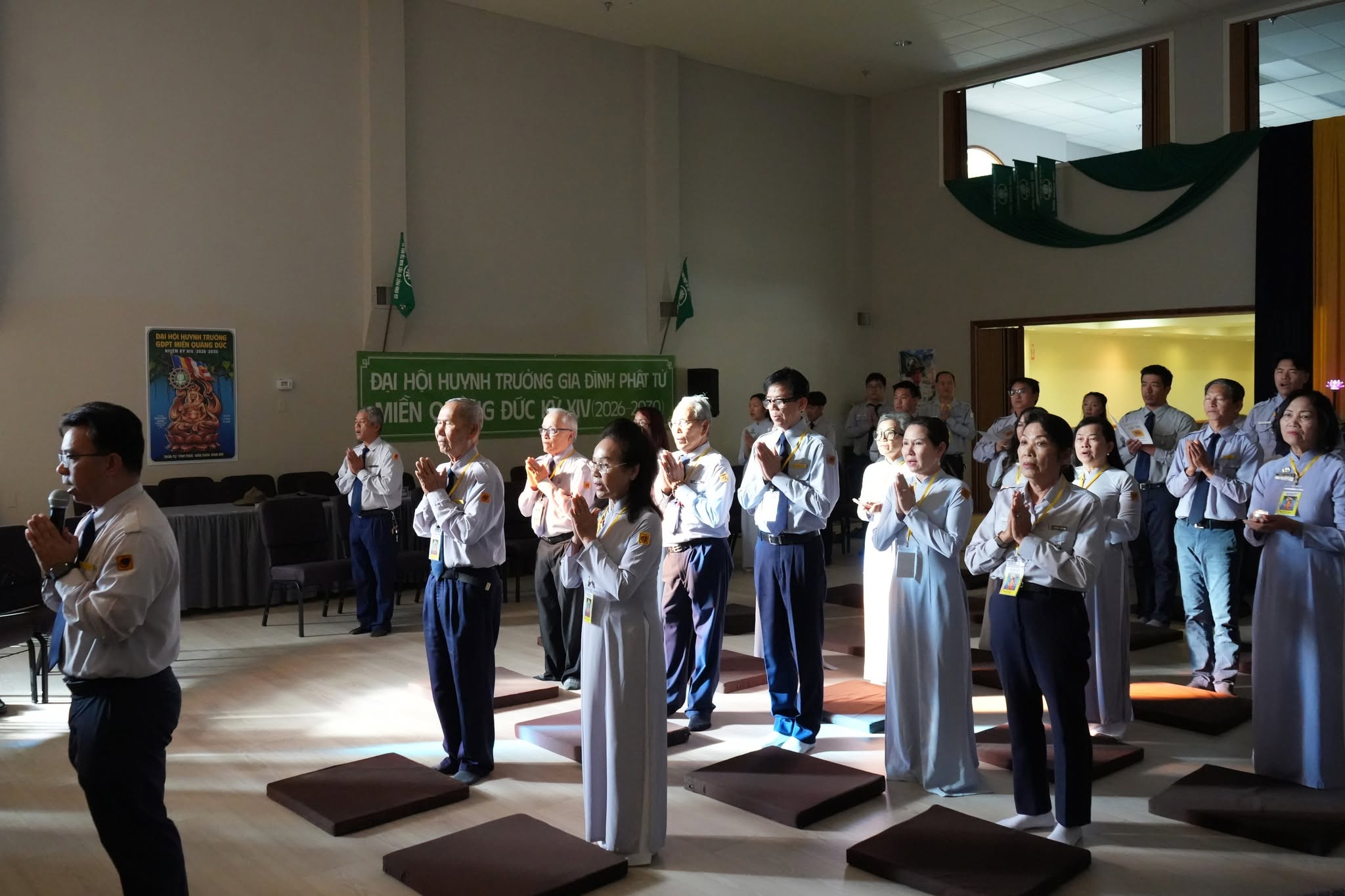
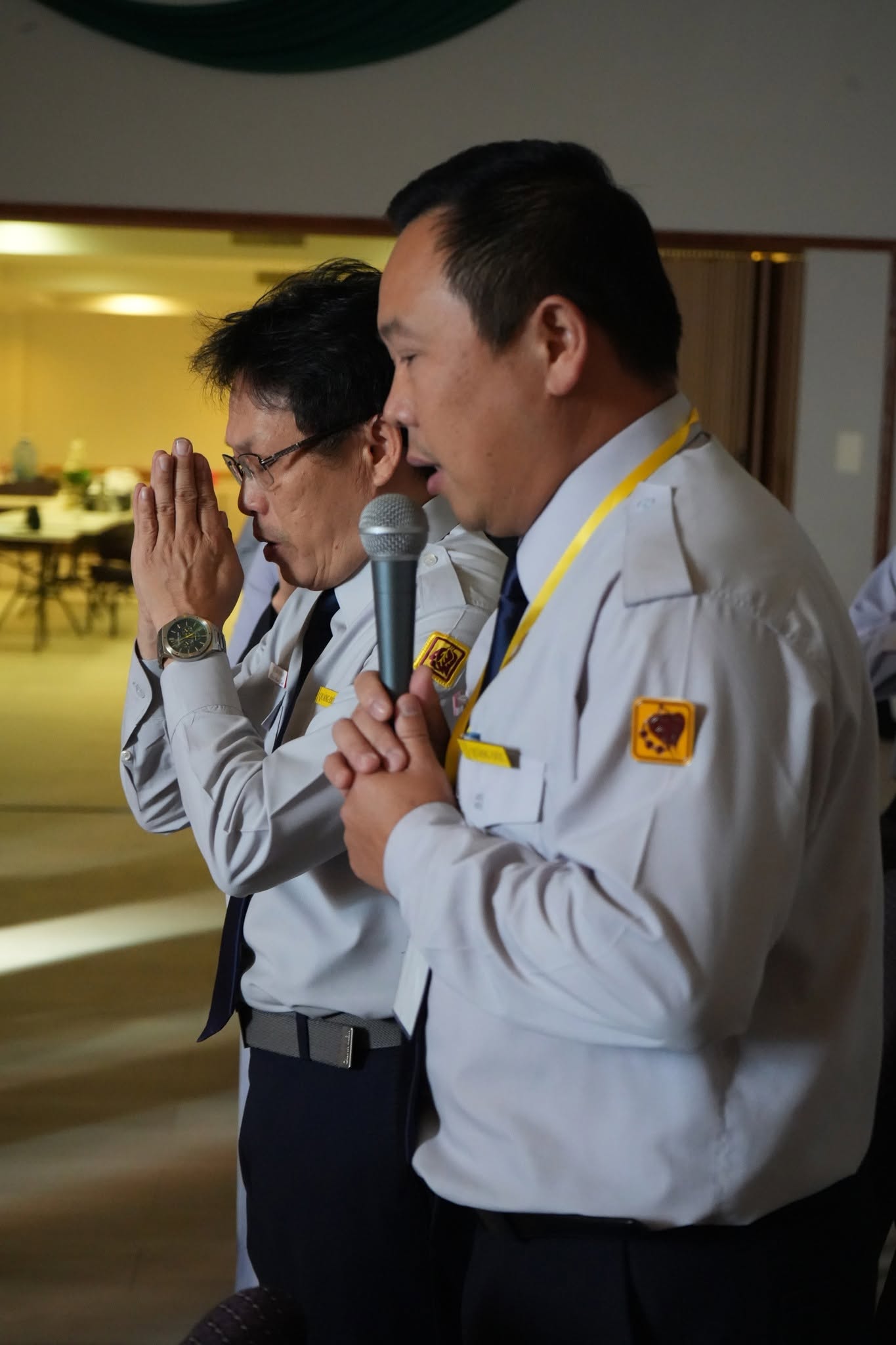
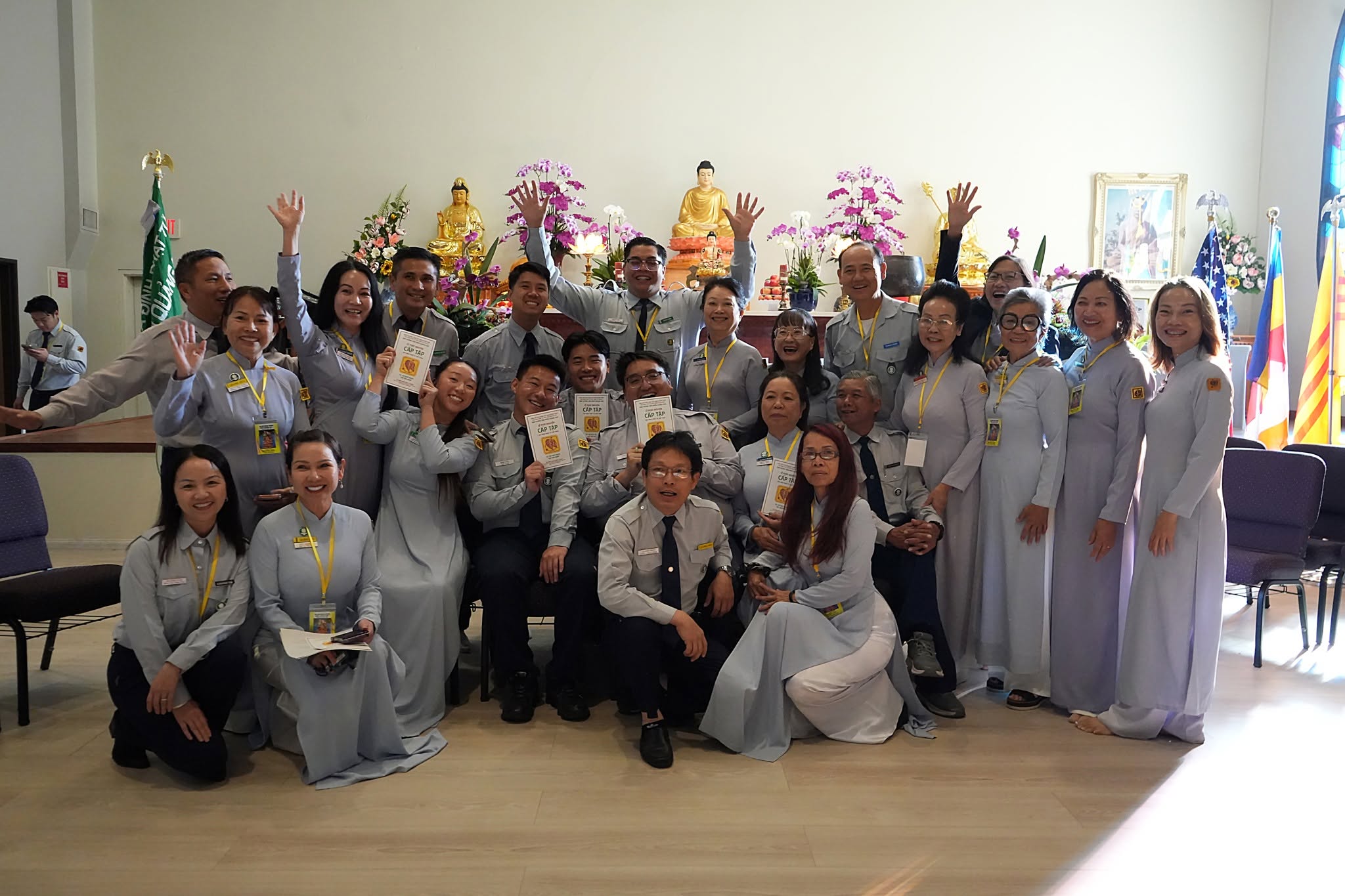
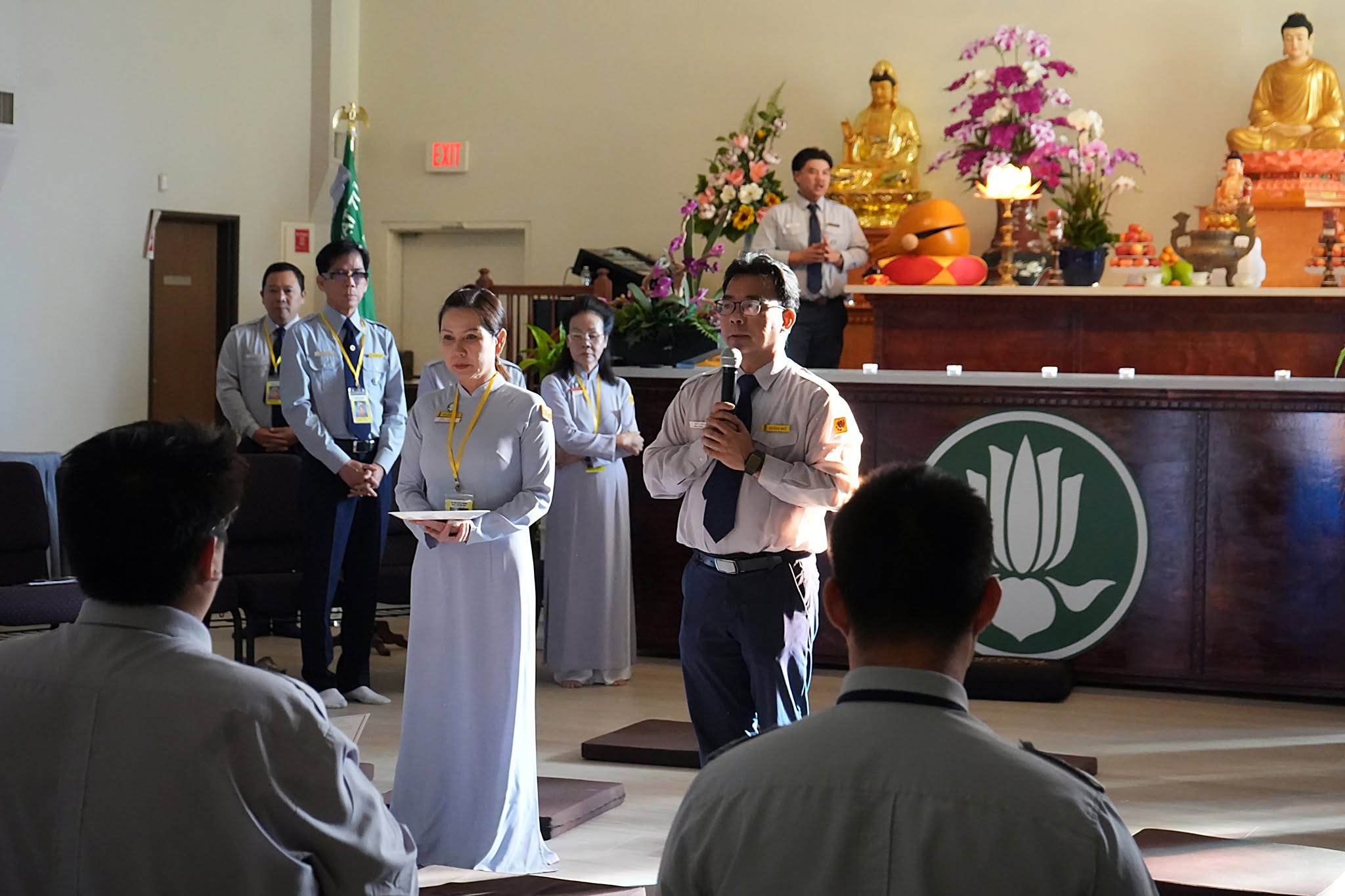
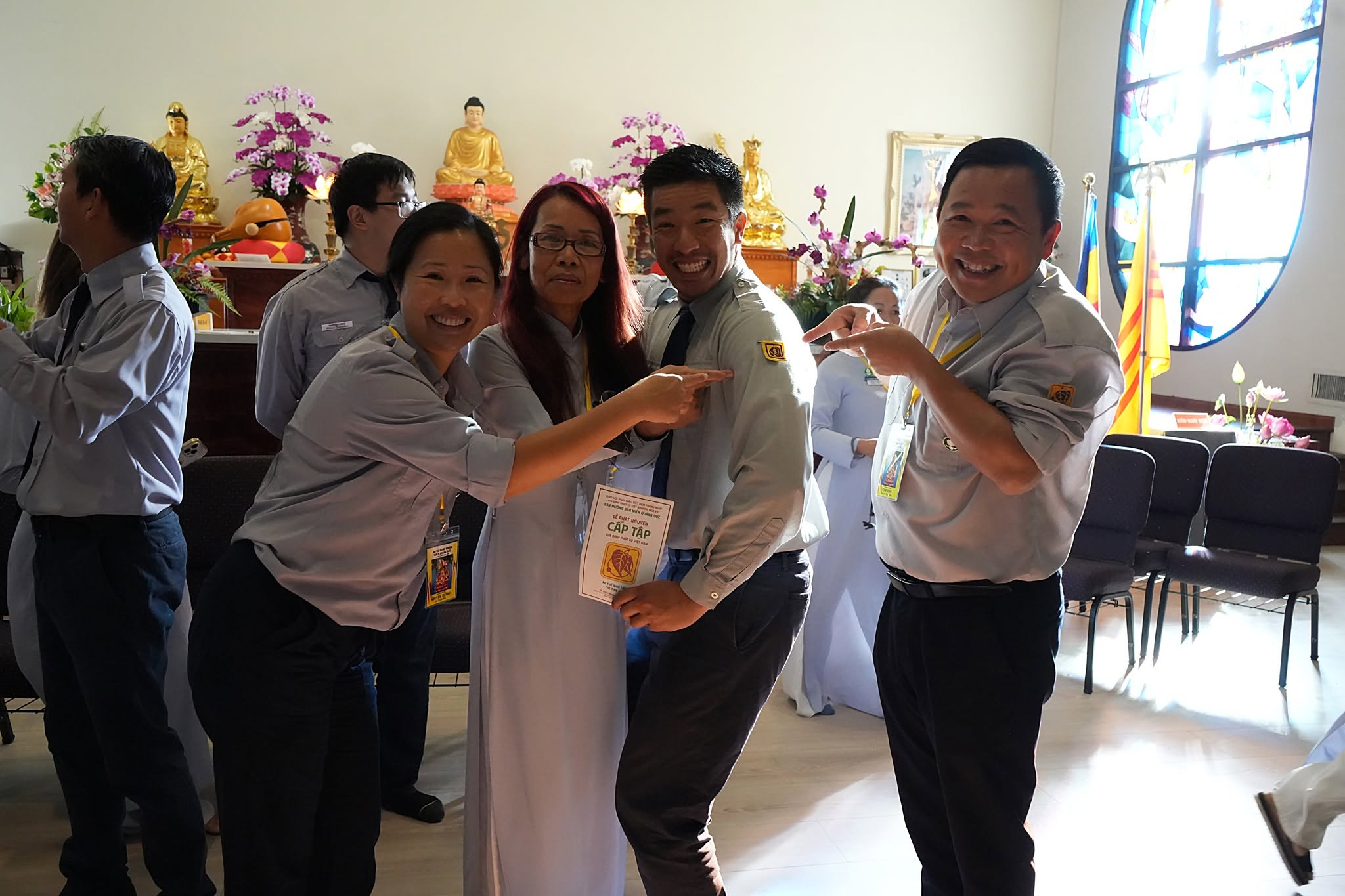
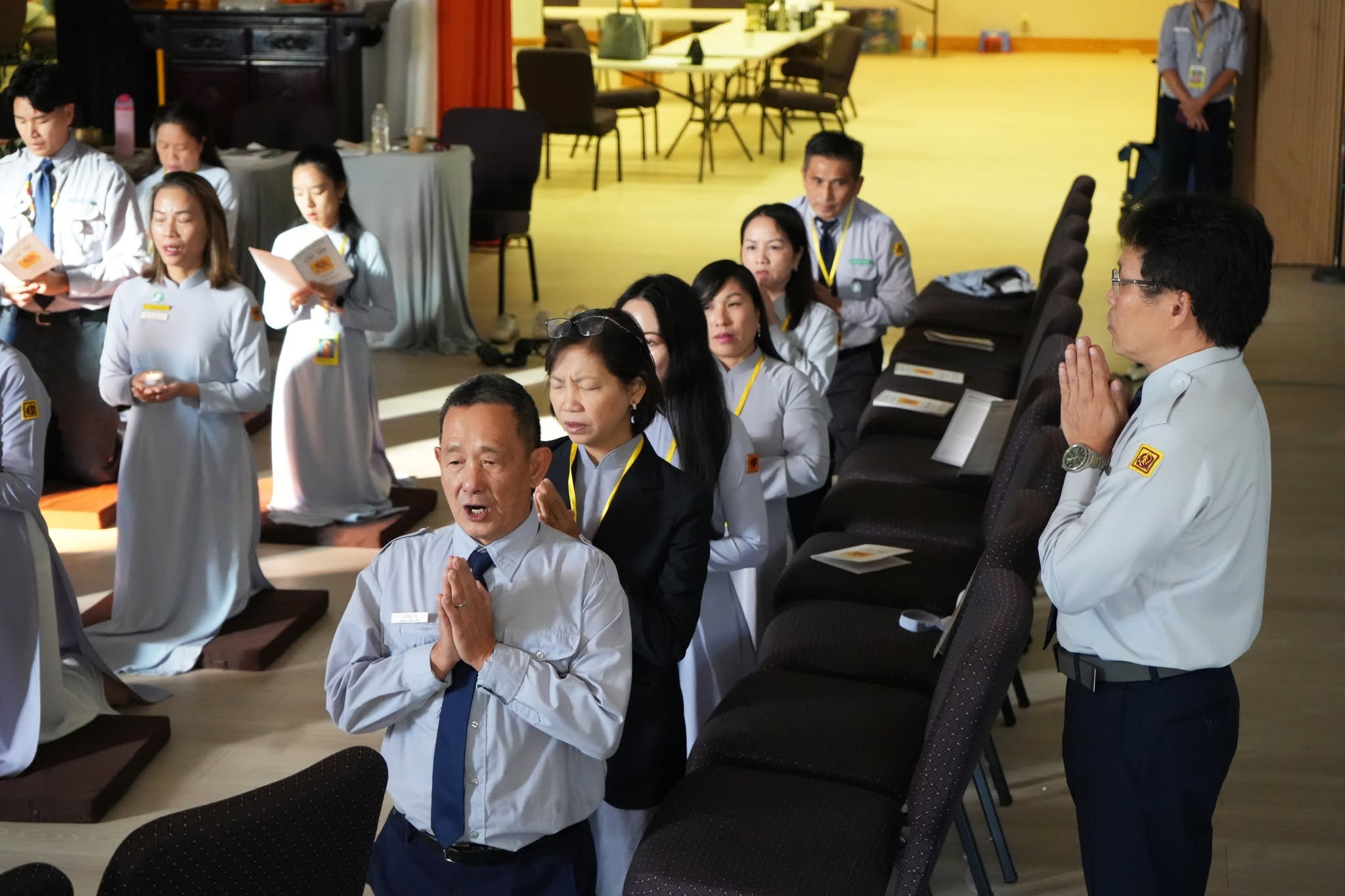
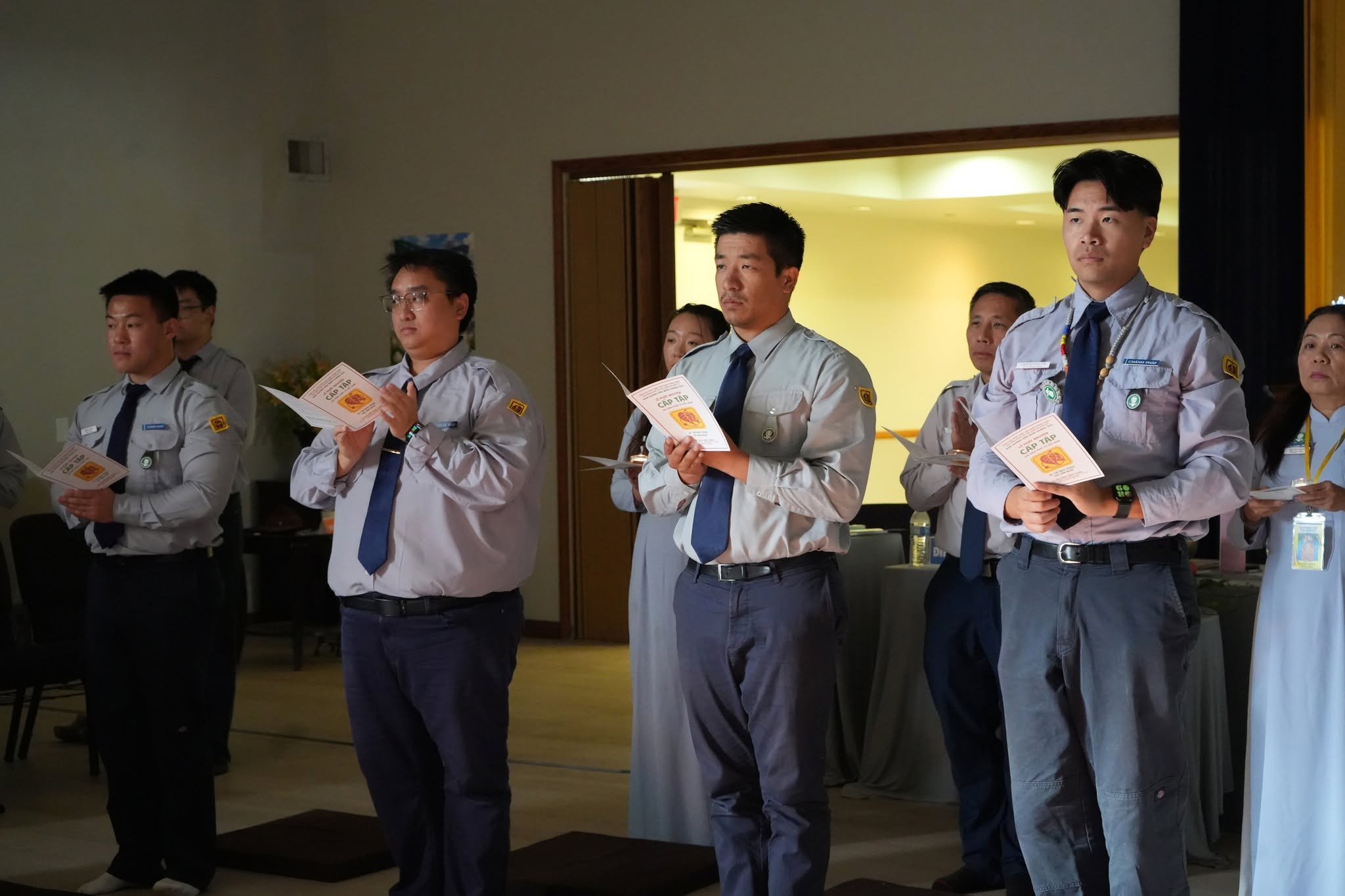
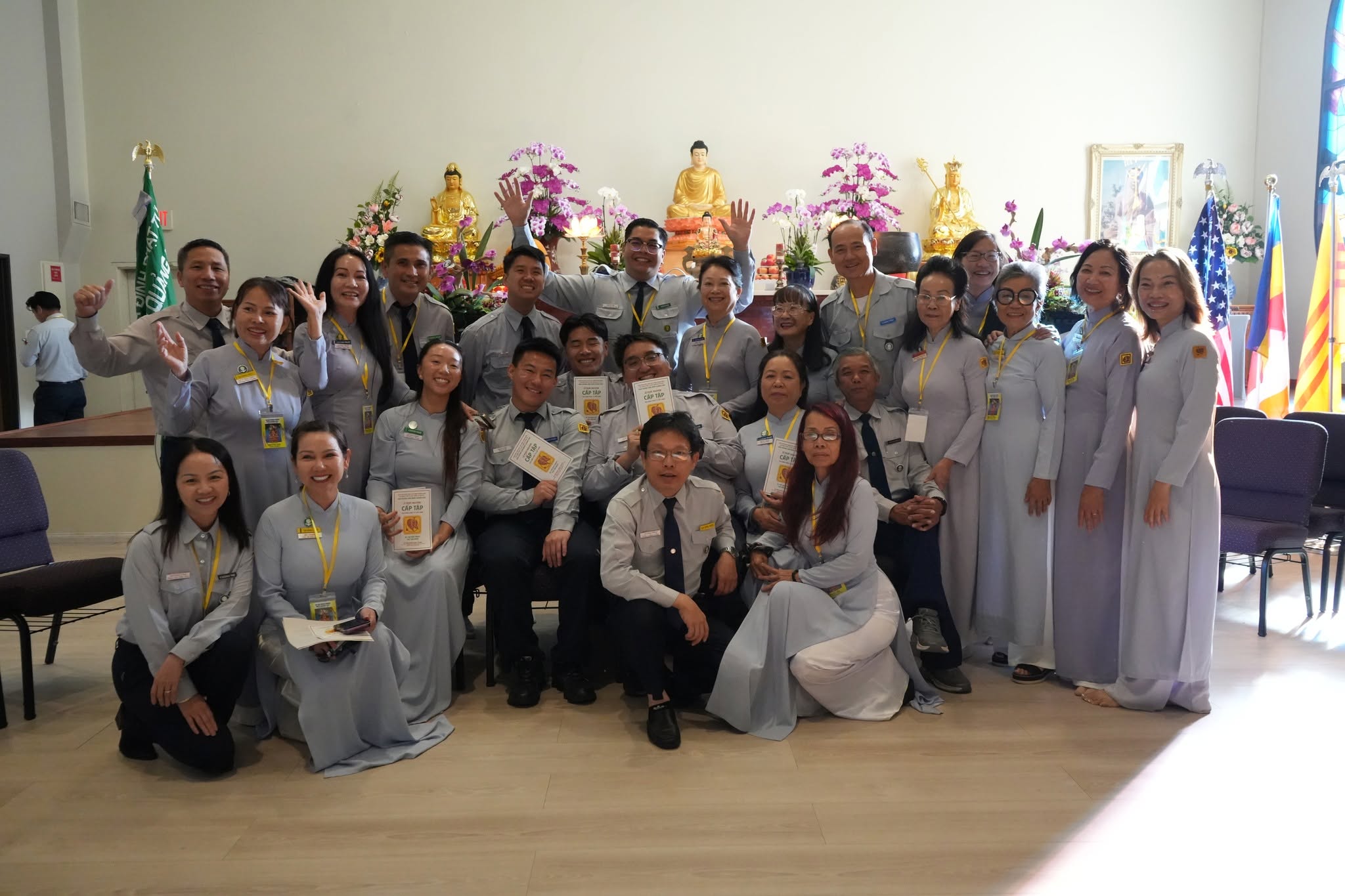
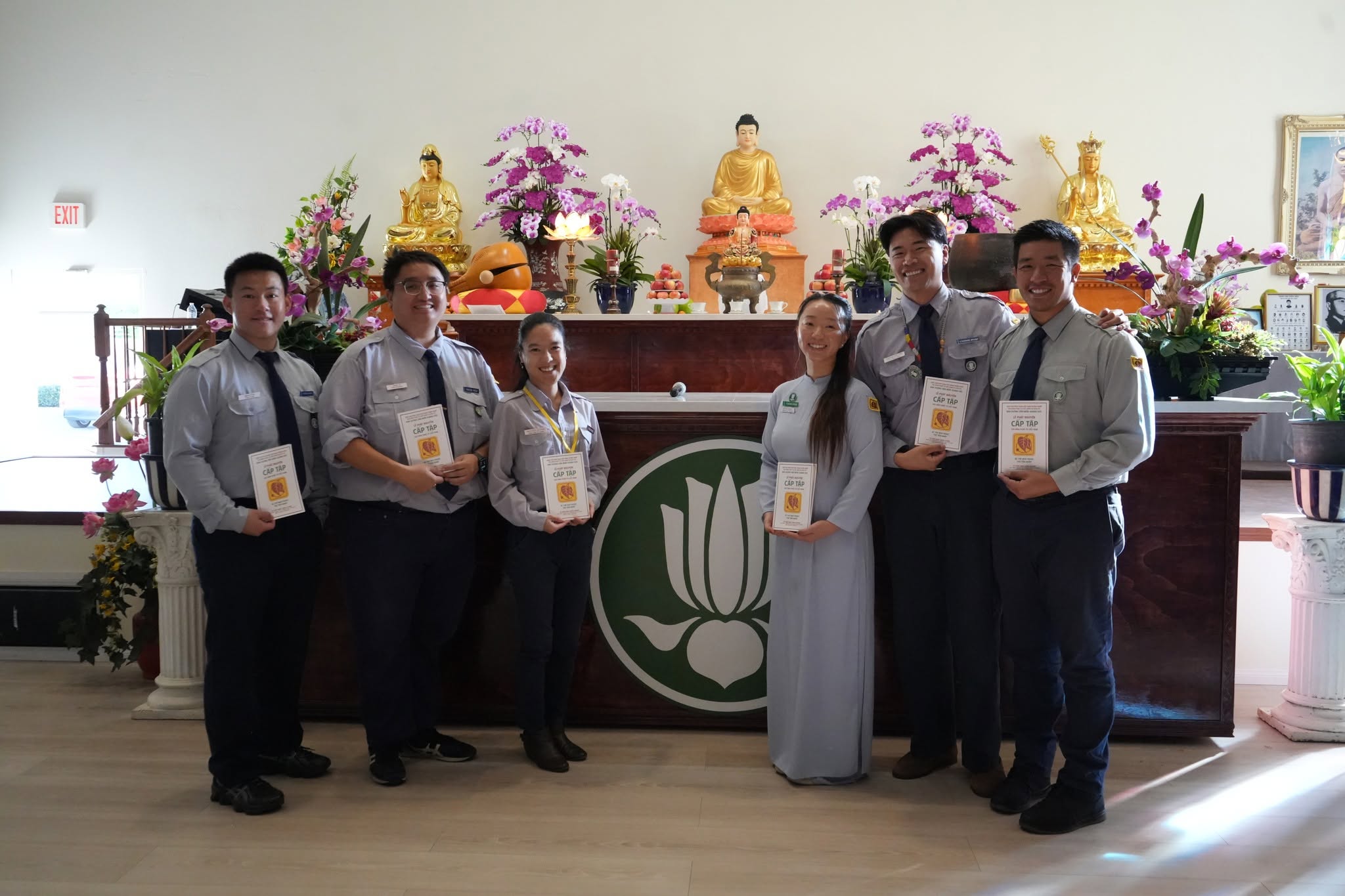
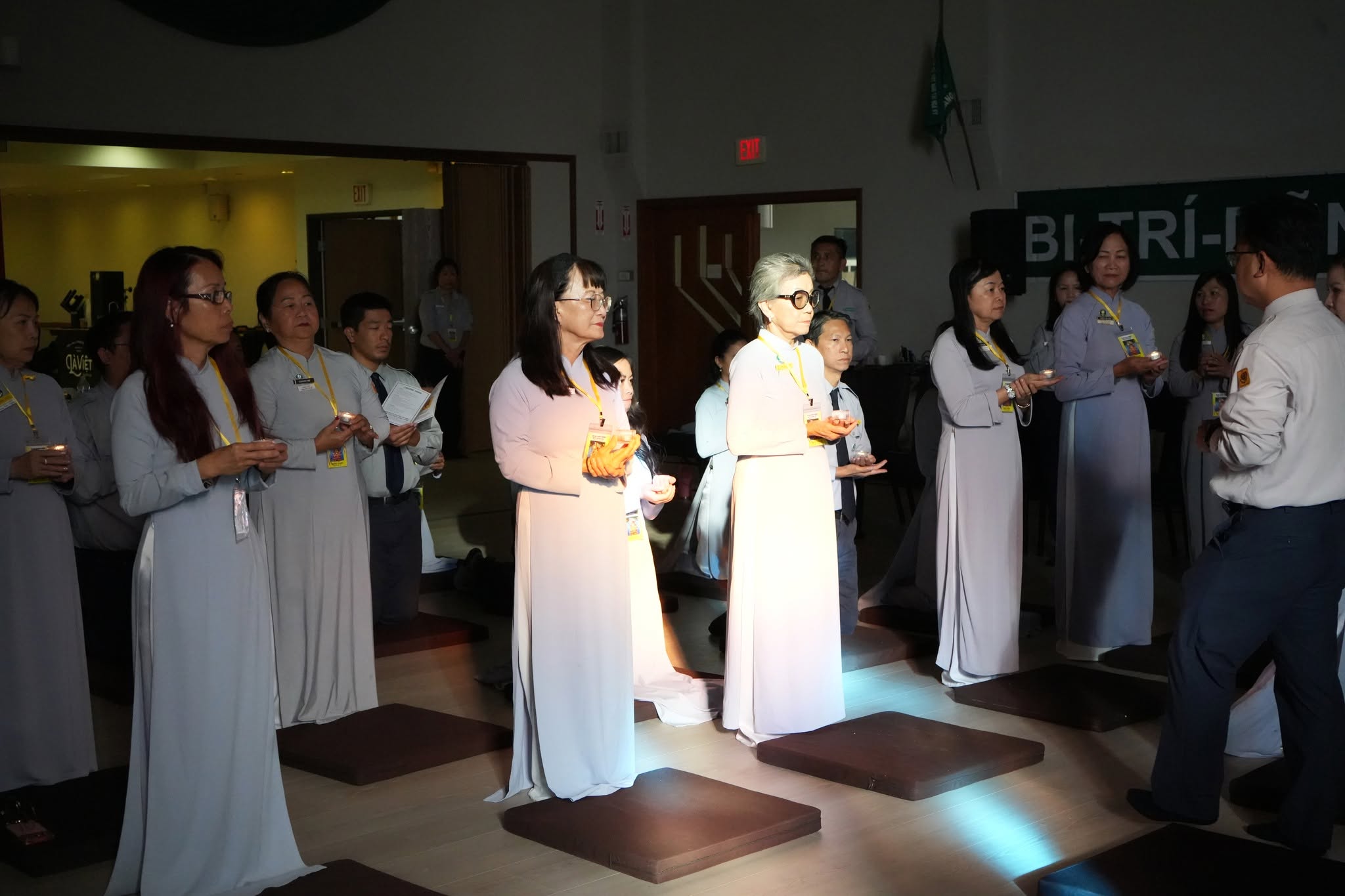
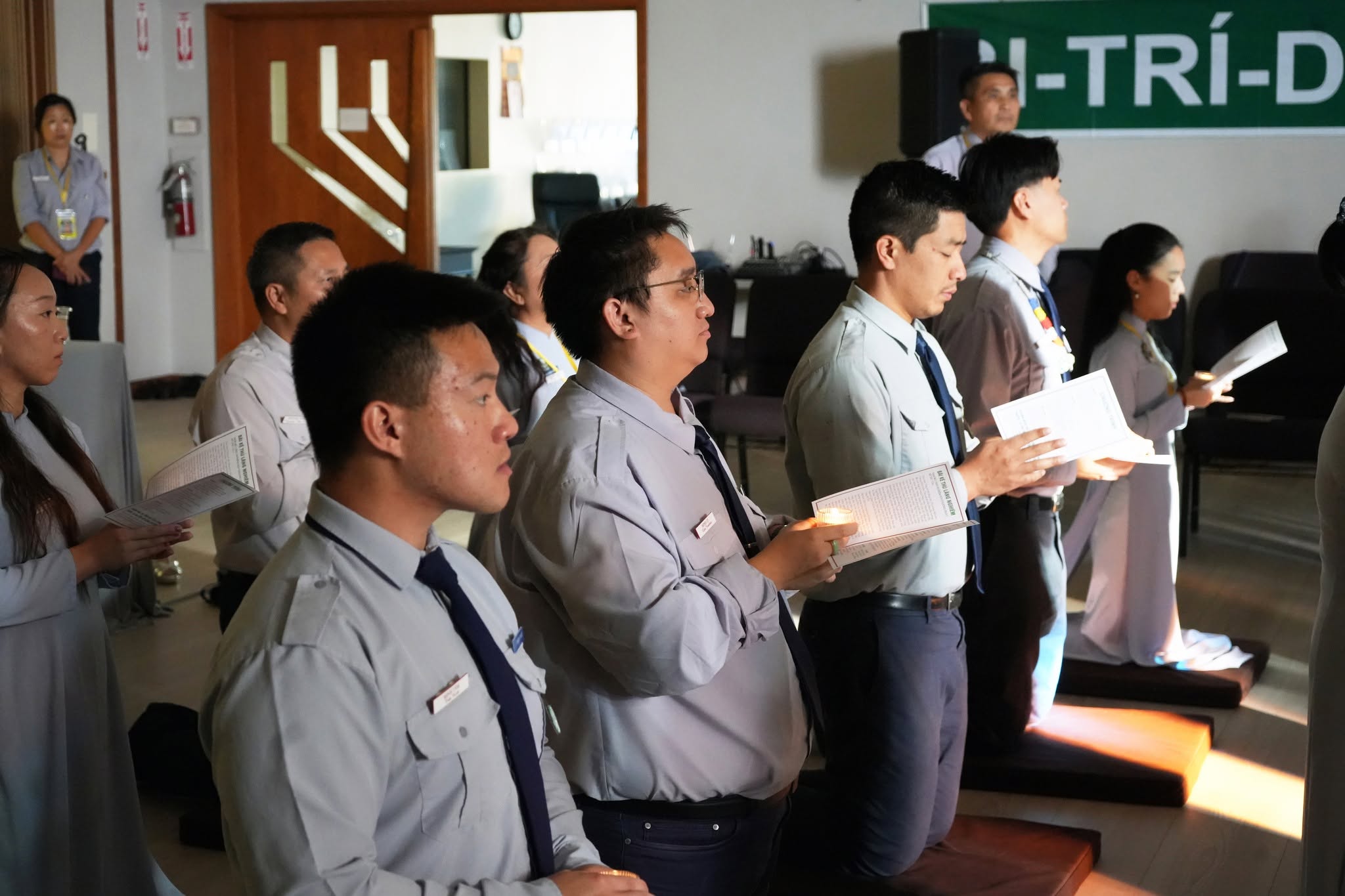
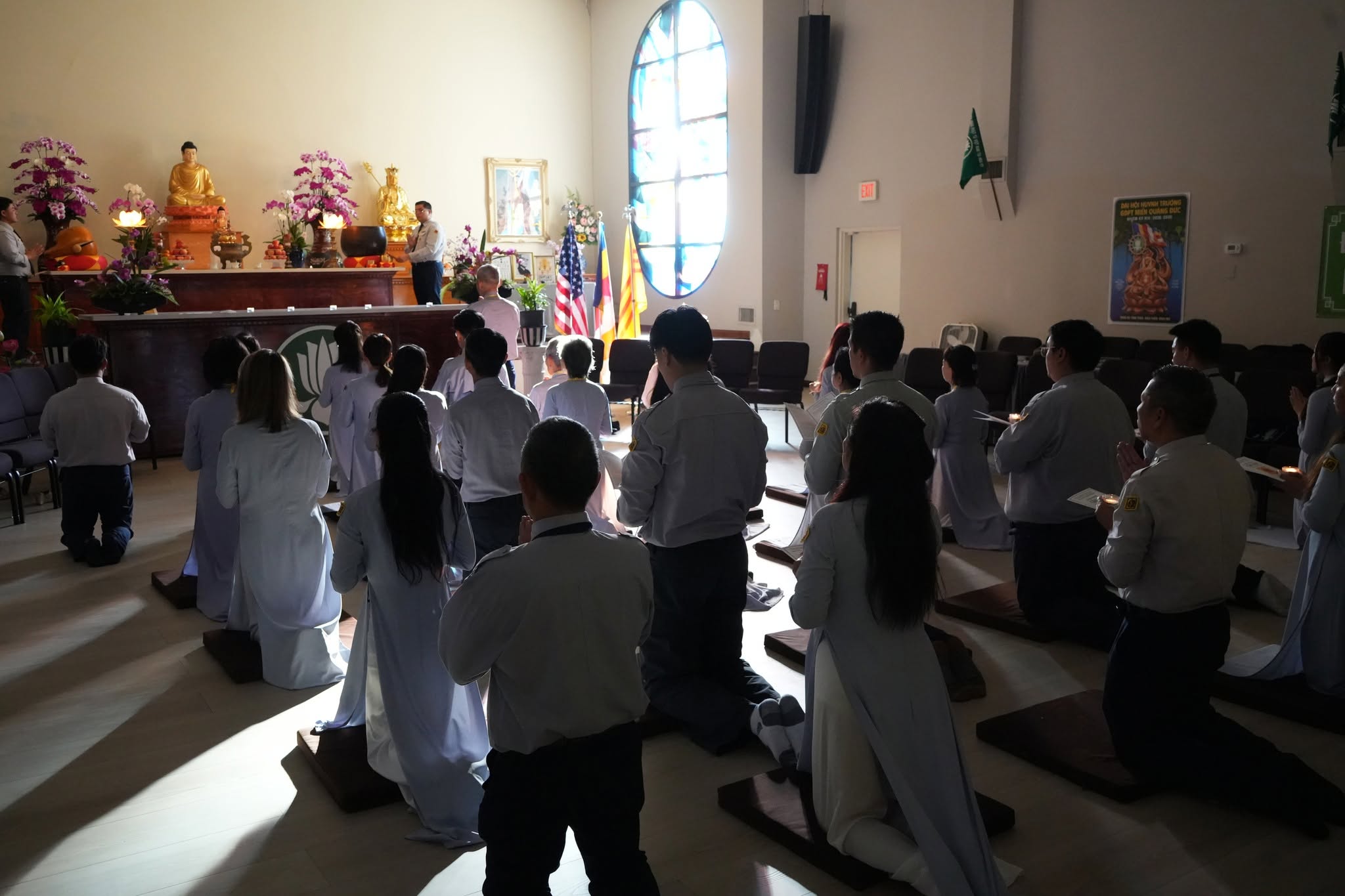
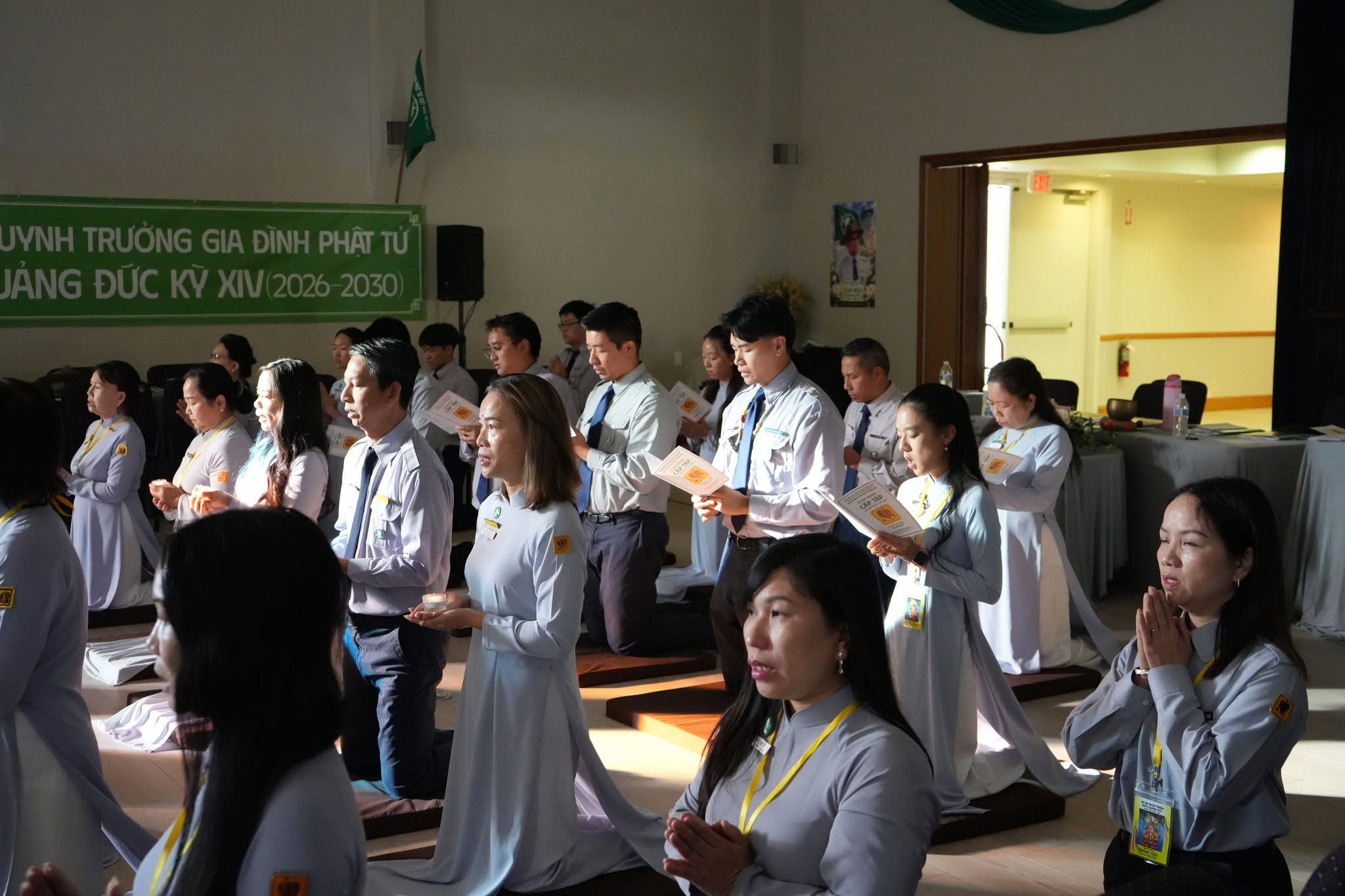
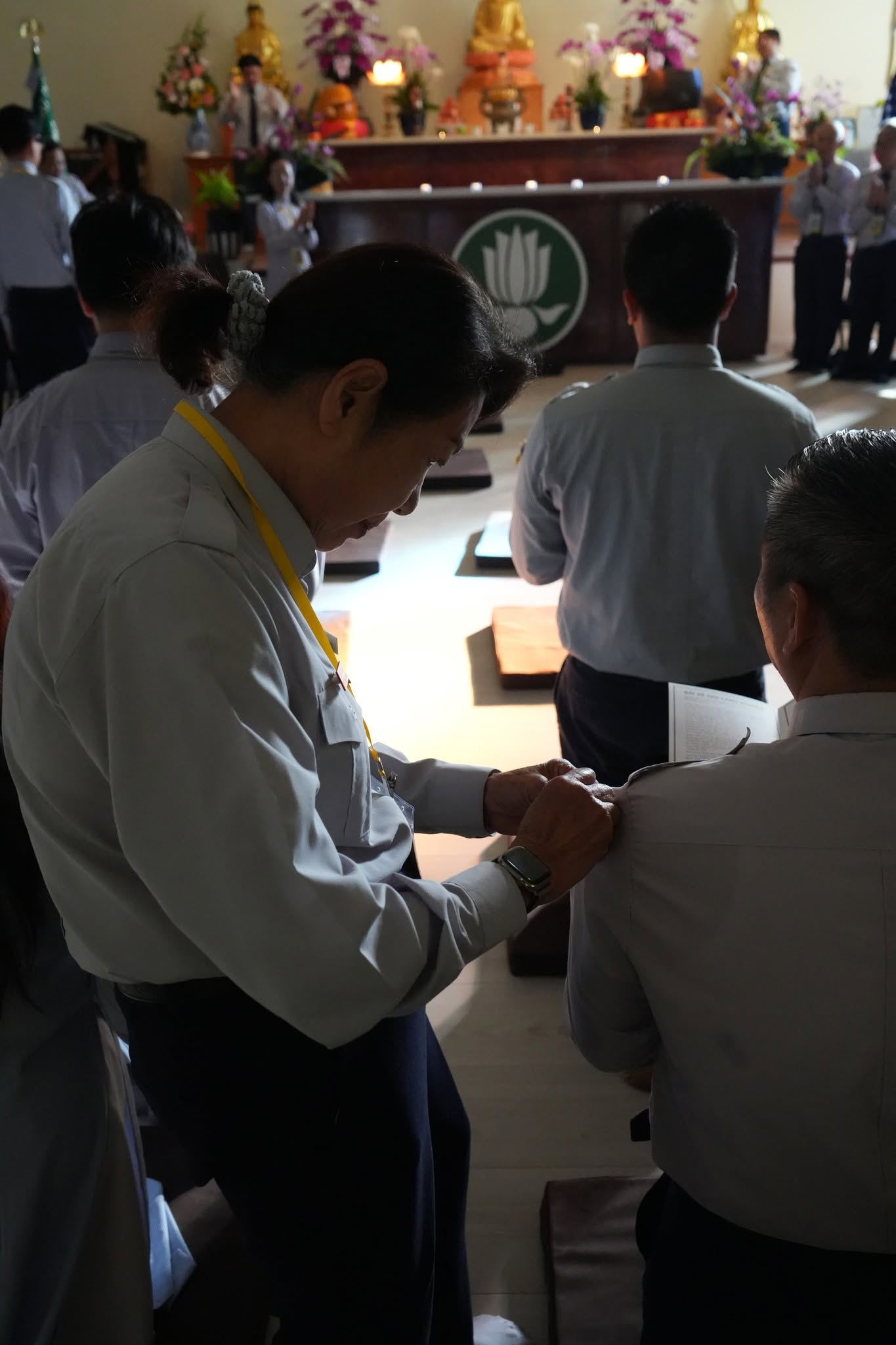
Lễ Thọ Cấp Tập Huynh Trưởng Gia Đình Phật Tử Việt Nam – Miền Quảng Đức, Hoa Kỳ tổ chức ngày 8 tháng 11 năm 2026 tại Tổ Đình Minh Đăng Quang, Fountain Valley, CA Nhân dịp Đại Hội Huynh Trưởng nhiệm kỳ XIV (2026-2030) – Ảnh: HTr Minh Tánh Hồ Khắc Hoàng Chánh | Tập Rank Conferment Ceremony for Huynh Trưởng (Buddhist Youth Leaders) of the Vietnamese Buddhist Youth Association – Quảng Đức Region, United States. Held on November 8, 2026, at Minh Đăng Quang Patriarchal Temple, Fountain Valley, California, on the occasion of the 14th Huynh Trưởng Convention for the 2026–2030 Term.
RECEIVING THE TẬP RANK, INHERITING THE LIGHT
OF THE DHARMA – EMBRACING THE MISSION
The Meaning and Spiritual Significance of Rank Evaluation and the Conferment of the Tập Rank
upon Huynh Trưởng of the Vietnamese Buddhist Youth Association in the United States
Throughout the journey of dedication to the ideals of the Vietnamese Buddhist Youth Association (Gia Đình Phật Tử Việt Nam – GĐPT), each stage of a Huynh Trưởng’s (Buddhist Youth Leader’s) development is recognized not merely by years of Buddhist study, practice, and organizational involvement, but also by the deepening of spiritual aspiration, moral character, and a sense of responsibility toward the organization. The Ceremony of Receiving the Tập Rank therefore carries profound spiritual significance, extending far beyond the formal bestowal of a rank insignia. It marks an important transition along the path of personal cultivation, self-discipline, and devoted service.
Before the Three Jewels, witnessed by the organization and embraced by the affection and trust of fellow members of the Blue Uniform Family, each Huynh Trưởng is afforded an opportunity to reflect upon the journey already undertaken, deepen their awareness of present responsibilities, and renew their solemn aspiration to carry forward the mission of educating, guiding, and nurturing younger generations. Particularly within the multicultural environment of the United States, receiving the Tập Rank also entails the significant responsibility of preserving the ideals of Compassion, Wisdom, and Courage (Bi – Trí – Dũng), transmitting the light of the Buddhadharma, and sustaining the living spirit of the Blue Uniform tradition for generations to come.
I. THE TẬP RANK WITHIN THE IDEALS AND TRADITIONS OF THE VIETNAMESE BUDDHIST YOUTH ASSOCIATION
The Vietnamese Buddhist Youth Association is an educational organization dedicated to children and young people, grounded in the teachings of the Buddha and guided by the principles of Compassion, Wisdom, and Courage in both thought and action. As defined in the Internal Regulations of the Vietnamese Buddhist Youth Association in the United States, its fundamental purpose is to cultivate young people into genuine Buddhists and to contribute to building society in accordance with Buddhist principles. To fulfill this ideal, the Huynh Trưởng holds a particularly important role, extending beyond the coordination of activities, organization of training camps, or transmission of Buddhist knowledge. Above all, a Huynh Trưởng must be one who continually cultivates the mind, pursues learning, develops moral discipline, and makes their own conduct an instrument of education.
The traditional Regulations Governing Huynh Trưởng devote their opening section to defining the Mission of the Buddhist Youth Leader, emphasizing the indispensable role of leadership in the flourishing or decline of the organization, as well as the inseparable relationship among moral integrity, knowledge, and practical experience in the education of children and youth. From this perspective, the system of Huynh Trưởng ranks was not established to measure human worth according to status or title. Rather, it serves to recognize personal development, clarify responsibilities, and establish a foundation for cultivating successive generations of leadership. The Tập Rank thus represents a significant stage of maturation along the Huynh Trưởng’s path of devoted service.
The Vietnamese word Tập may itself be contemplated as a reminder of the need for continuous practice: learning to live according to one’s ideals, learning to lead through moral virtue, learning to shoulder responsibility, cultivating patience and forbearance, and learning to serve with a spirit of selflessness. Receiving the Tập Rank does not signify the completion of one’s training; rather, it represents an opportunity to undertake greater responsibilities while continuing to mature along the path of cultivation and service.
II. RANK EVALUATION – ASSESSING NOT ONLY YEARS OF SERVICE, BUT ALSO MORAL CONDUCT AND THE CAPACITY TO SERVE
Within the organizational life of the Vietnamese Buddhist Youth Association, rank evaluation is an essential process intended to ensure seriousness, fairness, and continuity in the training and development of Huynh Trưởng. According to the Regulations Governing Huynh Trưởng of the Vietnamese Buddhist Youth Association in the United States, the basic requirements for consideration for the Tập Rank include at least three years of service at the Sơ Cấp (Preliminary Rank), a minimum age of twenty-two, upright moral character and personal conduct, a sincere willingness to serve the organization, completion of the Trì level of the Buddhist study and training curriculum, and successful completion of the A Dục Leadership Training Camp. The evaluation process proceeds through a recommendation at the local Gia Đình (Family Unit) level, followed by consideration by the Regional Rank Evaluation Council. These requirements demonstrate that leadership rank must be inseparably connected with three essential dimensions: spiritual cultivation and study, moral character, and the practical fulfillment of responsibility.
A Huynh Trưởng may have participated in the organization for many years, yet if that individual lacks the aspiration for self-improvement, the ability to guide younger members, or the trust and confidence of fellow members, length of service alone cannot adequately demonstrate maturity. Conversely, a Huynh Trưởng who remains consistently present for younger members, perseveres in the educational mission, maintains ethical conduct, listens attentively, and cooperates harmoniously with others embodies qualities worthy of recognition in the rank evaluation process. Rank evaluation therefore also offers the organization an opportunity to examine the quality and preparedness of its leadership, identify those capable of assuming greater responsibilities, encourage diligence in Buddhist study, practice, and service, and entrust its confidence to those who will help shape its future.
If rank evaluation is reduced to a merely administrative procedure, the system of ranks risks losing its deeper educational meaning. When carried out with responsibility, impartiality, and loving-kindness, however, it becomes a meaningful means of fostering the maturation of individual Huynh Trưởng and strengthening the organization as a whole.
III. RECEIVING A RANK – A SOLEMN VOW BEFORE THE THREE JEWELS
If rank evaluation represents the organization’s recognition and assessment of a Huynh Trưởng, then receiving the rank represents the individual’s voluntary acceptance of the responsibilities entrusted to them. These two processes complement one another, yet they are not identical: the former expresses institutional confidence and the delegation of responsibility, while the latter embodies conscious willingness and a solemn commitment to fulfill that responsibility. Within the traditions of the Vietnamese Buddhist Youth Association, rank conferment ceremonies are generally conducted with reverence before the Three Jewels, accompanied by spiritual witnessing, words of encouragement and exhortation, and the vows undertaken by those receiving their ranks. This spirit is likewise reflected in accounts of Huynh Trưởng rank conferment ceremonies and in the tradition of Truyền Đăng Tục Diệm—the transmission of the Dharma lamp and the perpetuation of its flame.
Standing before the sacred image of Śākyamuni Buddha, with palms joined in reverence toward the Three Jewels, the Huynh Trưởng is invited to reflect upon what has been accomplished for younger members, how far one has progressed in Buddhist study and spiritual cultivation, and how one must live from this moment forward to remain worthy of the organization’s trust. At that sacred moment, the rank insignia ceases to be merely an external symbol; it becomes a constant reminder of a responsibility freely and consciously accepted. The true value of the ceremony lies not simply in the solemnity of its outward forms, but in its capacity to awaken and deepen the spiritual aspirations of those participating. Through the ceremony, the Huynh Trưởng comes to understand that the ideal being pursued is not a matter of personal aspiration alone, but is intimately connected with the Three Jewels, the organization, and the many generations of young members who look to their leaders for guidance.
In this sense, receiving a rank is not the acquisition of another honor in which to take pride, but the acceptance of a greater responsibility to be carried with humility. A rank insignia may be bestowed in a single day, but the character and integrity of the recipient must be demonstrated through every day of service and practice.
IV. FROM THE LIGHT OF THE THREE JEWELS TO THE RESPONSIBILITY OF CONTINUITY – THE SPIRITUAL MEANING OF THE RANK CONFERMENT CEREMONY
Looking back upon the photographs of the ceremony, we encounter many moments worthy of contemplation: Huynh Trưởng in their blue uniforms standing reverently before the Buddha shrine, palms joined in the solemn moment of taking vows, candles carefully held, liturgical texts respectfully recited, and moments in which rank insignia are presented and affixed among fellow members. Together, these images may be understood as living symbols of spiritual transmission and continuity. The candle evokes the light of wisdom; palms joined in reverence express respect and collectedness of mind; and the presentation of rank insignia serves as a reminder of the responsibility borne by earlier generations toward those who follow. In the spirit of Truyền Đăng Tục Diệm, the light of the Buddhadharma does not end with any one individual, but continues to illuminate successive generations.
For a Huynh Trưởng of the Vietnamese Buddhist Youth Association, this transmission extends well beyond ceremonial observances. It is also expressed through weekly activities, Dharma lessons prepared for the Oanh Vũ (younger children’s section), songs taught to members of the Thiếu Section, overnight camps, Huynh Trưởng meetings, and quiet acts of kindness offered to young members experiencing difficulties. A Huynh Trưởng may receive a rank insignia within the solemn surroundings of a Buddhist shrine hall, yet the true significance of that vow is realized only upon returning to the local unit and continuing to perform the ordinary but essential duties of leadership with perseverance and devotion. The ceremonial hall is where the rank is received; everyday life is where the vow must be fulfilled.
V. THE DISTINCTIVE MISSION OF TẬP-RANK HUYNH TRƯỞNG IN THE UNITED STATES
While the Vietnamese Buddhist Youth Association in Vietnam developed within a longstanding Buddhist and Vietnamese cultural environment, Huynh Trưởng serving in the United States must undertake responsibilities shaped by a different social and cultural setting. The development of the Vietnamese Buddhist Youth Association in the United States is closely associated with the resettlement of Vietnamese communities and their efforts to reestablish and sustain local Blue Uniform units in a new homeland following 1975. Today, within a multicultural society, Huynh Trưởng are entrusted not only with teaching the Buddhadharma but also with bridging generations and helping young people of Vietnamese heritage develop a harmonious relationship between their cultural identity and their lives in American society. This mission is both noble and demanding.
For many young members born or raised in the United States, English is the primary language of education and everyday social interaction. Speaking Vietnamese and understanding family traditions, the history of Vietnamese Buddhism, and the cultural heritage of their ancestors may no longer come as naturally as they did to earlier generations. Huynh Trưởng at the Tập Rank must therefore develop the ability to transmit traditional values through educational methods suited to younger generations. Preserving Vietnamese cultural identity does not mean requiring young people to live exactly as previous generations did; rather, it means helping them understand the value of their roots so that they may freely choose to respect and carry forward that heritage. Teaching Vietnamese is more than teaching a language; it opens a doorway through which young members may better understand their grandparents and parents, the songs of the Vietnamese Buddhist Youth Association, and the meaning of Buddhist ceremonies. Likewise, teaching the Buddhadharma is not simply a matter of helping students memorize doctrinal principles, but of guiding them to apply compassion, mindfulness, responsibility, and ethical discernment in everyday life.
One of the most significant challenges facing the Vietnamese Buddhist Youth Association in the United States is maintaining a continuing succession of qualified Huynh Trưởng. Many local units face shortages of leadership personnel, geographical distances, competing obligations of employment, education, and family life, as well as changing interests and needs among younger generations. Under these circumstances, Tập-rank Huynh Trưởng must recognize that the organization’s continued development cannot depend solely upon the dedication of its senior generations. Receiving the Tập Rank must be accompanied by a willingness to undertake duties, accept greater responsibilities, and prepare others to continue the work. A strong local unit is not merely one that has a large number of members today, but one that is capable of nurturing its young members into the Huynh Trưởng of tomorrow. Each recipient of the Tập Rank should therefore ask how many young members they can help mature in the years ahead, and whom they can help prepare to assume the responsibilities they now carry. Such achievements are a far more meaningful measure of leadership than the number of years one has worn a rank insignia.
In American society, the education of children and adolescents also requires the integration of Buddhist traditions with contemporary educational approaches. A Huynh Trưởng must learn to listen, engage in meaningful dialogue, respect differences, safeguard the well-being of children, and cultivate a healthy, inclusive, and compassionate environment. Compassion (Karuṇā) is not limited to affection for younger members, but includes the capacity to understand their circumstances and difficulties. Wisdom (Prajñā) extends beyond knowledge of Buddhist doctrine to encompass an understanding of psychology, educational methods, social realities, and the skillful application of appropriate means (Upāya). Courage, or spiritual fortitude, involves more than enthusiasm for accepting assignments; it also requires the strength to overcome obstacles, assume responsibility, acknowledge and correct mistakes, and uphold what is right. A Tập-rank Huynh Trưởng must strive to make Compassion, Wisdom, and Courage living qualities expressed through every action.
VI. RECEIVING THE TẬP RANK – THE BEGINNING OF GREATER RESPONSIBILITY
For an educational organization with a longstanding tradition such as the Vietnamese Buddhist Youth Association, succession involves both the transfer of duties from older to younger generations and the transmission of ideals, experience, moral integrity, and loving-kindness. The generations that came before have devoted many years to building the organization, sustaining its activities, training Huynh Trưởng, and preserving the flame of the White Lotus through periods of historical change and upheaval. The present generation has a responsibility to honor those contributions not merely through remembrance of the past, but through concrete actions that enable the organization to continue developing.
Within the context of the Vietnamese Buddhist Youth Association in the United States, this responsibility becomes especially urgent. The organization needs Huynh Trưởng who not only cherish the blue uniform but also possess the ability to organize, teach, guide, and adapt; individuals who respect tradition while remaining open to renewing educational methods; and exemplary leaders who place the well-being and education of young members, together with the harmony of the community, above personal differences. An organization cannot sustain itself solely through solemn ceremonies, successful conventions, or beautiful commemorative photographs. Such occasions acquire their enduring significance only when followed by the continued growth and maturation of the people who constitute the organization. The true accomplishment of a rank conferment ceremony, therefore, is revealed not only on the day it takes place, but also throughout the years of dedicated service that follow.
VII. FROM TODAY’S SOLEMN VOW TO TOMORROW’S ACTIONS
Looking back upon the commemorative photographs of the ceremony, we see not only solemnity and reverence, but also smiles, hands joined in friendship, and the shared joy of fellowship within the Blue Uniform Family. These images remind us that although the path of a Huynh Trưởng entails many responsibilities, it is never a solitary journey. Every Huynh Trưởng is supported by the affection of fellow members, the guidance of senior leaders, the trust of younger members, and the shared ideals of the organization. For this reason, those receiving the Tập Rank should continue to cultivate the humility of a practitioner of the Dharma, the earnest aspiration of one who is still learning and growing, and the perseverance of one who has solemnly vowed to serve.
Leadership rank should never be regarded as a destination for self-satisfaction, nor should rank insignia be treated as a source of authority from which respect may be demanded. Genuine respect must be earned through moral integrity, fairness, selfless dedication, and the ability to bring benefit to others. A worthy Tập-rank Huynh Trưởng need not be the most eloquent speaker, the most prominent individual, or the person holding the greatest number of positions. Such a leader may simply be the one who consistently arrives on time for activities, patiently guides a shy young Oanh Vũ member, prepares lessons after long hours at work, willingly acknowledges mistakes, seeks reconciliation, and refuses to abandon the local unit during times of difficulty. It is precisely through these quiet and seemingly ordinary acts that the solemn vow is nurtured and ultimately fulfilled.
VIII. CONCLUSION – A MODEST INSIGNIA, A PROFOUND SPIRITUAL ASPIRATION
Amid the solemn atmosphere before the Buddha shrine, illuminated by the gentle light of candles and witnessed by the fellowship of the Blue Uniform Family, the Huynh Trưởng receives the Tập Rank with heartfelt reverence and, at the same time, begins a new journey. That journey is measured neither by the number of conventions attended, certificates earned, nor rank insignia worn upon the uniform, but by personal transformation and the meaningful benefits that the Huynh Trưởng brings to young members, the local unit, and the wider community.
For the Vietnamese Buddhist Youth Association in the United States, every Huynh Trưởng receiving the Tập Rank today carries a particularly significant expectation: to become a bridge between tradition and the future, between generations of Vietnamese people, and between the spirit of Buddhism and contemporary life. This is the mission of carrying forward the lamp of the True Dharma (Saddharma), preserving the ideals of Compassion, Wisdom, and Courage, and helping nurture generations of genuine Buddhists in their adopted homeland. May every Huynh Trưởng, after receiving the rank, continually reflect upon the responsibility now entrusted to them: having been granted the organization’s confidence today, how should one live and serve tomorrow to remain worthy of that trust?
Ultimately, rank evaluation serves to identify those prepared to shoulder responsibility; receiving a rank signifies a solemn vow to dedicate oneself to service; wearing the insignia is a continual reminder to live in a manner worthy of that commitment; and carrying forward the Blue Uniform tradition means transmitting the light of the Buddhadharma, loving-kindness, and the ideal of selfless service to generations yet to come.
The White Lotus continues to blossom in a new land. The light of its noble ideal will continue to shine for as long as there are Huynh Trưởng who dedicate their lives to younger generations, to the Buddhadharma, and to the future of the Vietnamese Buddhist Youth Association.
Buddhist Era 2570 – San Diego, California, November 12, 2026
TÂM ĐỊNH Nguyễn Xuân Hiệp